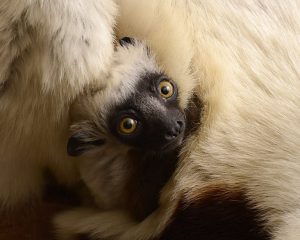
Clinging to her mom, this baby Coquerel’s sifaka represents the only lemur species at the DLC known to fall prey to cryptosporidium, a microscopic parasite that causes diarrhea that can last for a week or more. The illness wipes out much of the animals’ gut microbiome, researchers report, but fecal transplants can help them recover.
Read the full release: “Lemur Research Gets A Gut Check.”
Lydia and Erin’s work is an excellent example of the non-invasive research conducted at the DLC — and how, by working closely with our technician, conservation, and veterinary staff, Duke researchers help improve the welfare of the DLC’s lemur population!

Learn more about Duke graduate student Lydia Greene in “Greene Finds Her Religion in Lemur Paradise,” and in our blog post “Fiber and Feces: ‘Lettus’ Research!”