Between July 6-17, 2026, the entire DLC Museum of Natural History team was in the Green River Basin of Wyoming, searching for the fossils of lemur-like primates that lived in North American forests a few million years after the dinosaurs went extinct.
Collaborating with Minnesota-based paleontologist Anne Kort, we explored sites in the high-altitude South Pass area where former DLC Museum Director Gregg Gunnell worked for several decades. Herds of pronghorn, elk, and wild horses made each morning’s drive to the outcrop feel like a North American safari.

Honeycomb Buttes.
Around the Honeycomb Buttes we found a site exploding with the tiny mammal jaws and fish skeletons. We were joined by the Culler family, friends of the DLC Museum who have stopped by the museum open house, and regularly road trip through Wyoming. They helped us catalogue our finds back in camp in Atlantic City, Wyoming (named for being just east of the Continental Divide) and sponsored our very necessary mosquito prevention equipment.
(Learn why the DLC travels to Wyoming every summer.)
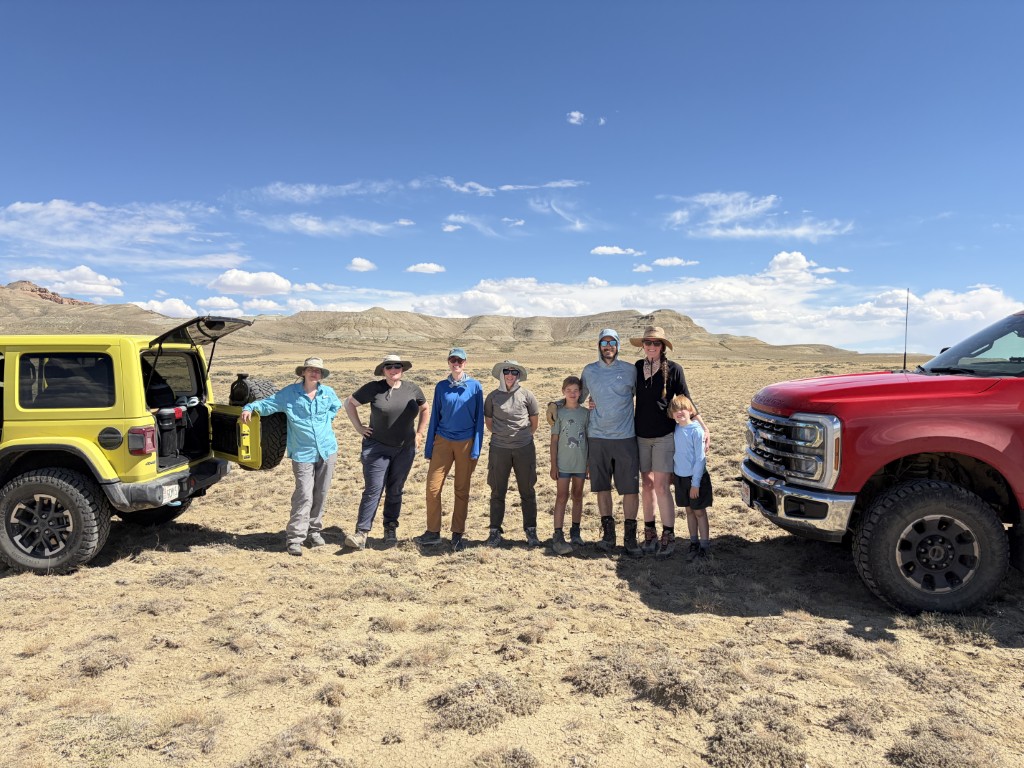
The Culler family and the DLC crew.
In 2024, Duke graduate student Julia Stone and Anne Kort went on a treasure hunt for a site near the Twin Buttes called “The Saddle.” They knew from old field notebooks written by paleontologist Mac West that there were a lot of fossils in the area, but access roads on the Bureau of Land Management land near the Flaming Gorge had changed and the exact spot needed to be reestablished. After scrambling through the badlands for most of the day, they finally found a lens of sediment with chunky brontothere (extinct distant relatives of rhinos and horses) limb bones. But storm clouds gathered over the Uinta Mountains, and they had to hike out before the storm turned the off-road track into goop.
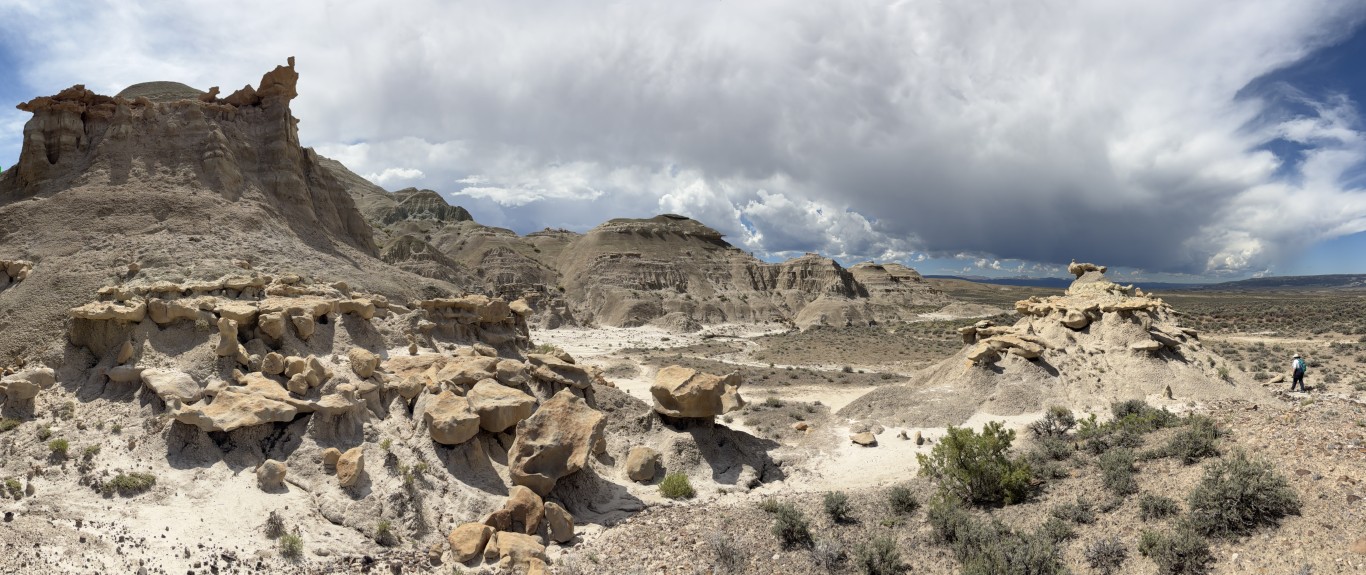
The route to The Saddle.
This year we returned to The Saddle, following the hard-won GPS track made by Julia and Anne. The scramble up the unstable sandstones was rewarded by an explosion of fossils. Along with large mammal bones we found rodent teeth and the delicate jaws of the lemur-like primates that once called the Rocky Mountains home. When Matt tried to sit down on the outcrop to take fieldnotes about a beautiful jaw, he almost sat on a tiny horse ankle bone. Then as he crawled to his pack to get a specimen bag for the ankle, he found a complete row of upper teeth from a guinea pig-sized creature called Hyopsodus. So. Many. Fossils. Then the inevitable storm clouds built. Time to pack up our gear, scramble down the screen, and swear to come back next year.
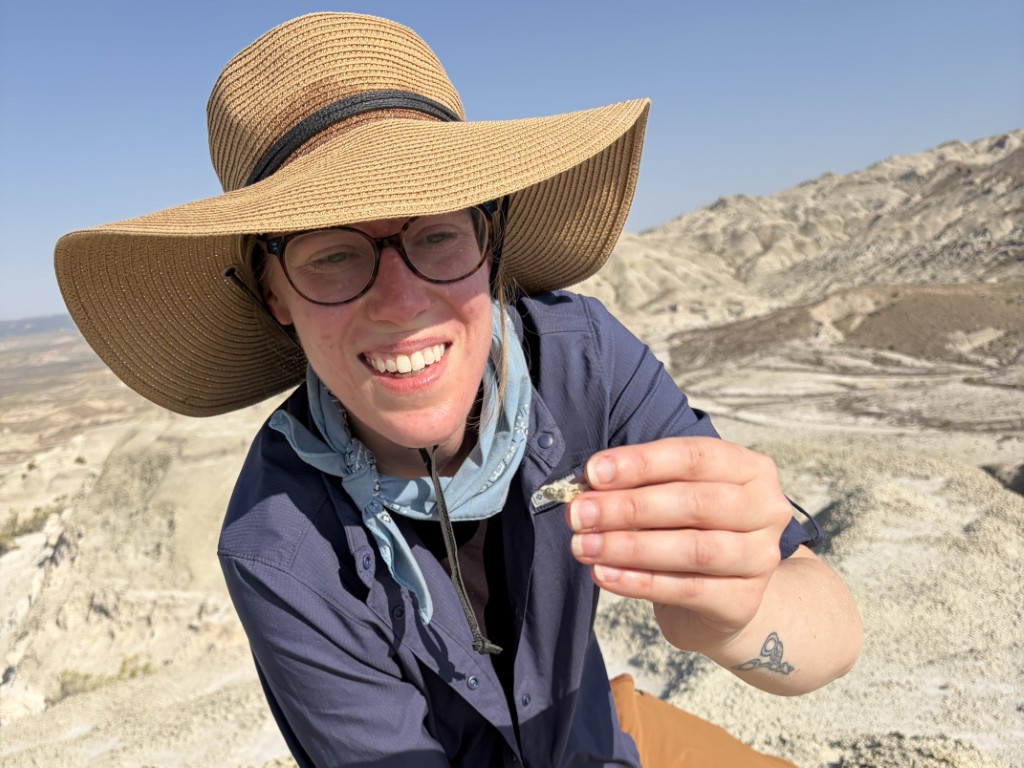
Kate discovers a fossil at The Saddle.
The final phase of the season was in the Bridger Basin where Duke teams have been working for over a decade near Lyman, Wyoming. We collaborate with John Alexander, a researcher at the Burke Museum in Seattle, who has been on the hunt for beautiful, articulated skeletons for decades. On our first morning at a site called Stargate, Kate found a nearly complete crocodile skull and Sierra found a skeleton of Smilodectes, a distant relative of lemurs that once leapt through the Wyoming jungles.
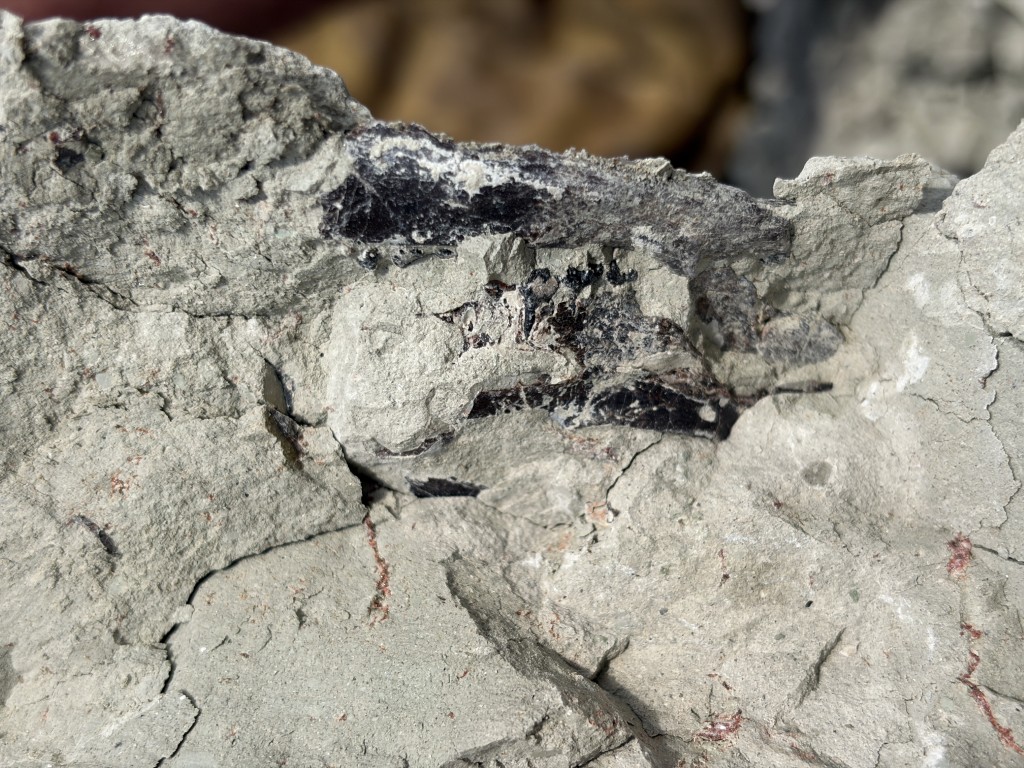
Smilodectes skull peeking out of the rock.
We unwrapped the specimens as part of our July and August Open House events. Vistors watched the specimens emerge from their field wrappings and find a new home in specimen boxes. The Smilodectes skeleton, crocodile skull, and dozens of other fossils are in the preparation lab, waiting to be reassembled for research. If you have a chance, drop by the DLC Museum to see what’s emerging from the rock!
Posted November 6, 2026.