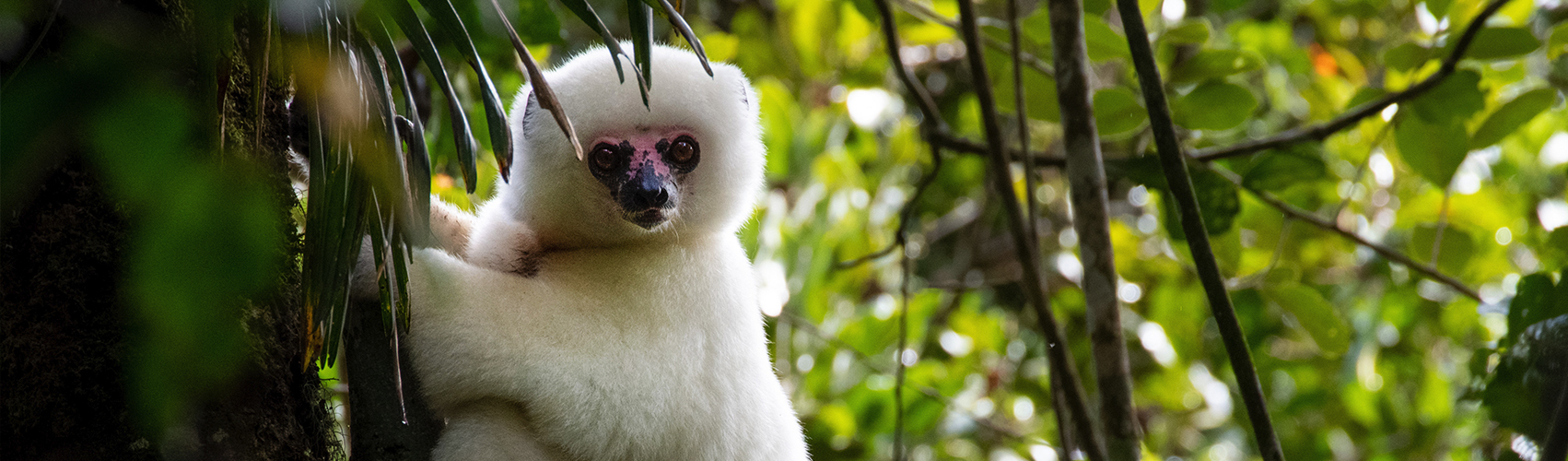
Through a partnership between WWF Madagascar, the Duke Lemur Center, community conservation associations (VOIs/COBAs), and community forest guardians, monitoring surveys were conducted across the expansive COMATSA South landscape to assess the status of the Critically Endangered silky sifaka (Propithecus candidus).
Photo by Martin Braun.
Survey teams identified up to 10 potential silky sifaka groups across multiple localities within the landscape. Observations documented group size and age-class composition, providing valuable information on population status and reproduction. In total, the groups included an average of 2 adults, including an average of 1 male and 1-2 females where individuals could be reliably identified. One group had 10 individuals, which is an unusually large group for this species. Three groups were observed with 1, 2, and 3 offspring that were just born this year.
Data were collected using standardized line-transect surveys, with direct observations, and informed by local community members’ knowledge of the forest.
The surveys also documented several ongoing threats to silky sifaka habitat, including illegal logging, artisanal mining, agricultural clearing, charcoal production, and lemur trapping/hunting. While these pressures remain significant in some areas, other sites show encouraging signs of improvement due to community-based forest management, local surveillance efforts, and increased environmental awareness.
Overall, the results are optimistic. The presence of multiple groups, including juveniles, suggests that some populations continue to reproduce successfully. These results likely reflect a combination of conservation efforts, community engagement, strengthened local governance, and ongoing awareness and monitoring activities.
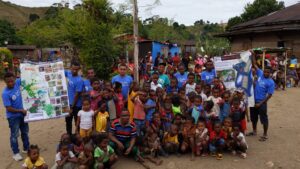
In addition to ecological monitoring, partners delivered environmental education activities to 683 students across 13 villages, helping build local stewardship for lemur conservation and forest protection. Students participated in 4 lessons which taught about the environment, biodiversity, lemurs, and stewardship. Classroom lessons were coupled with outdoor activities, and even though it was the summer vacation, students were excited to go to school and learn about lemurs.
More research and outreach are needed in the COMATSA-Sud protected area, a valuable habitat for lemurs and for people.
Support Our Work
100% of funds for the DLC’s conservation projects come from donors and grants. Please consider making a contribution today to support SAVA conservation. Thank you!