Podcast
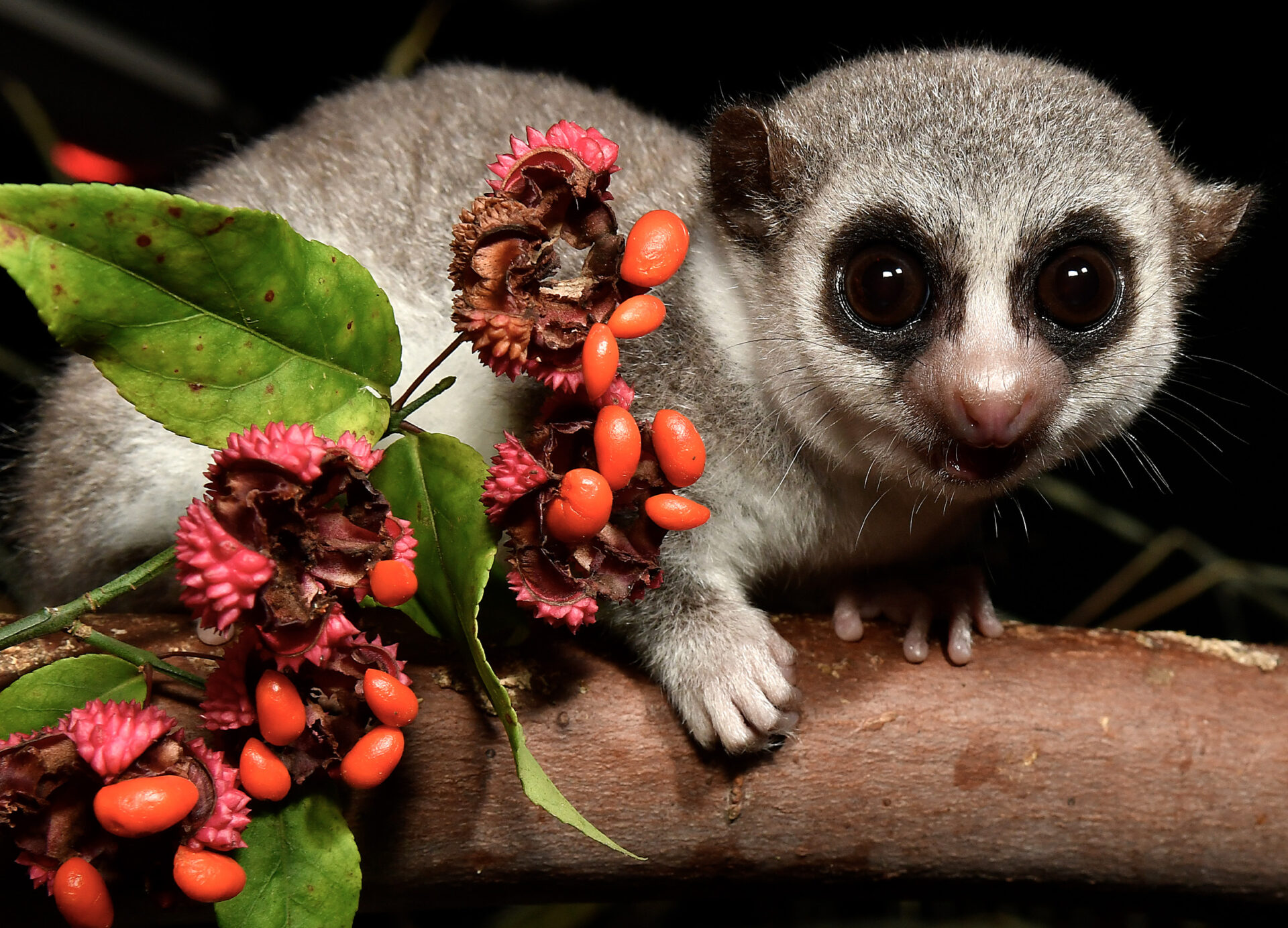
In “A Creature That Has a Superpower” (Winter 2026), we discuss a truly incredible little lemur with evolutionary superpowers: the fat-tailed dwarf lemur!
Dwarf lemurs are the only members of our primate family tree that are obligate hibernators. Tune in for a crash course in what makes these hibernating primates so fascinating and how the DLC’s non-harmful research into their unique adaptations could have far-ranging impacts from conservation to human health to deep space travel.
Listen to this popular episode online, read the full transcript, and explore our website learn all about Duke Lemur Center.
Video
The Anna Borruel Codina Center for Lemur Medicine and Research is equipped with two hibernation rooms, called hibernacula, that allow husbandry and research staff to mimic the natural conditions that modulate hibernation in the wild. Doing this, we’re able to replicate, to a degree, the dwarf lemurs’ experiences in Madagascar and gain insight into how this incredible survival technique works.
Recent Articles
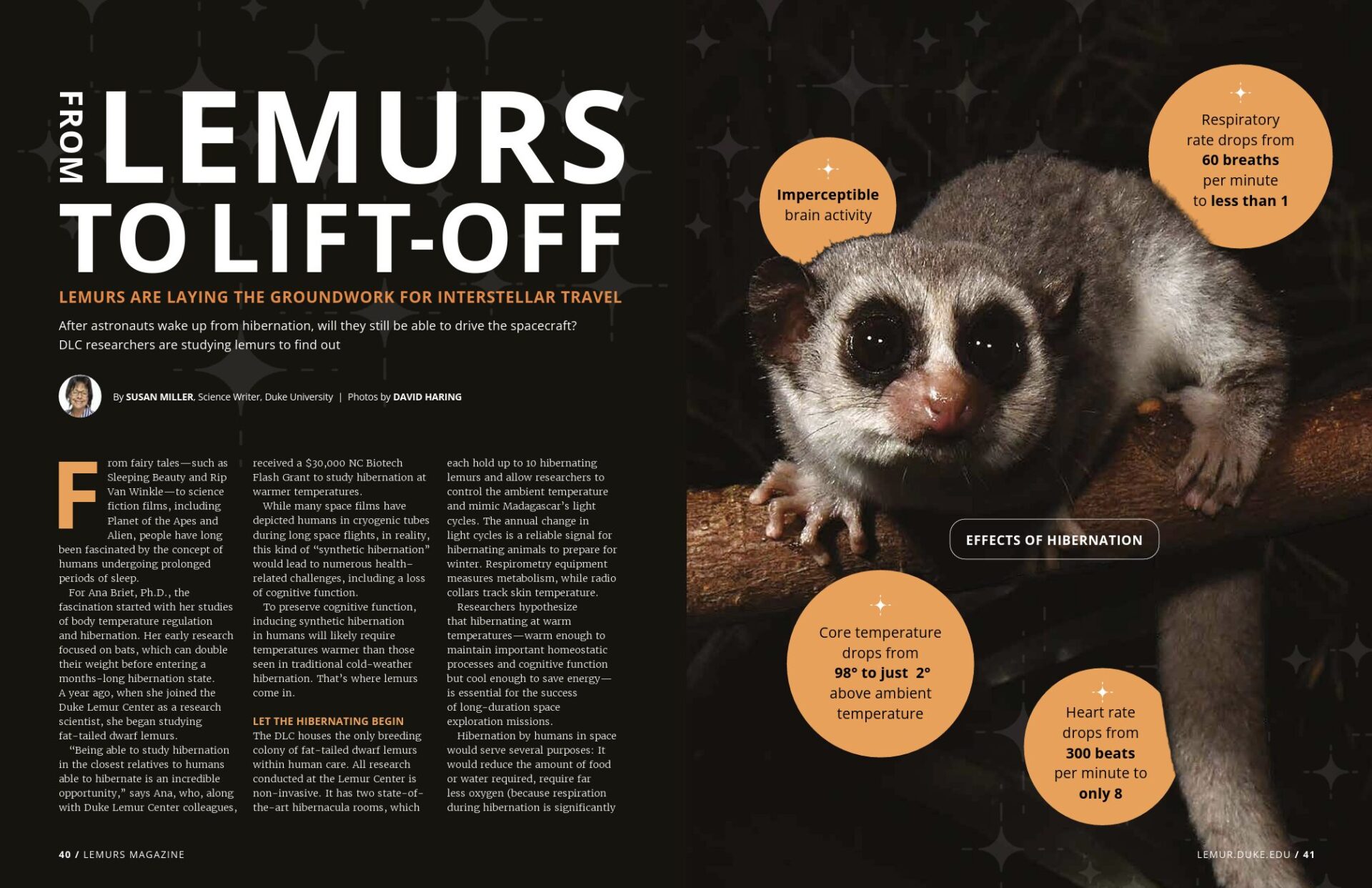
From Lemurs to Lift-off: Lemurs are laying the groundwork for interstellar travel
After astronauts wake up from hibernation, will they still be able to drive the spacecraft? Duke researchers are studying lemurs to find out. Read on the blog or on pages 40-43 of LEMURS Magazine: Reasons for Hope.
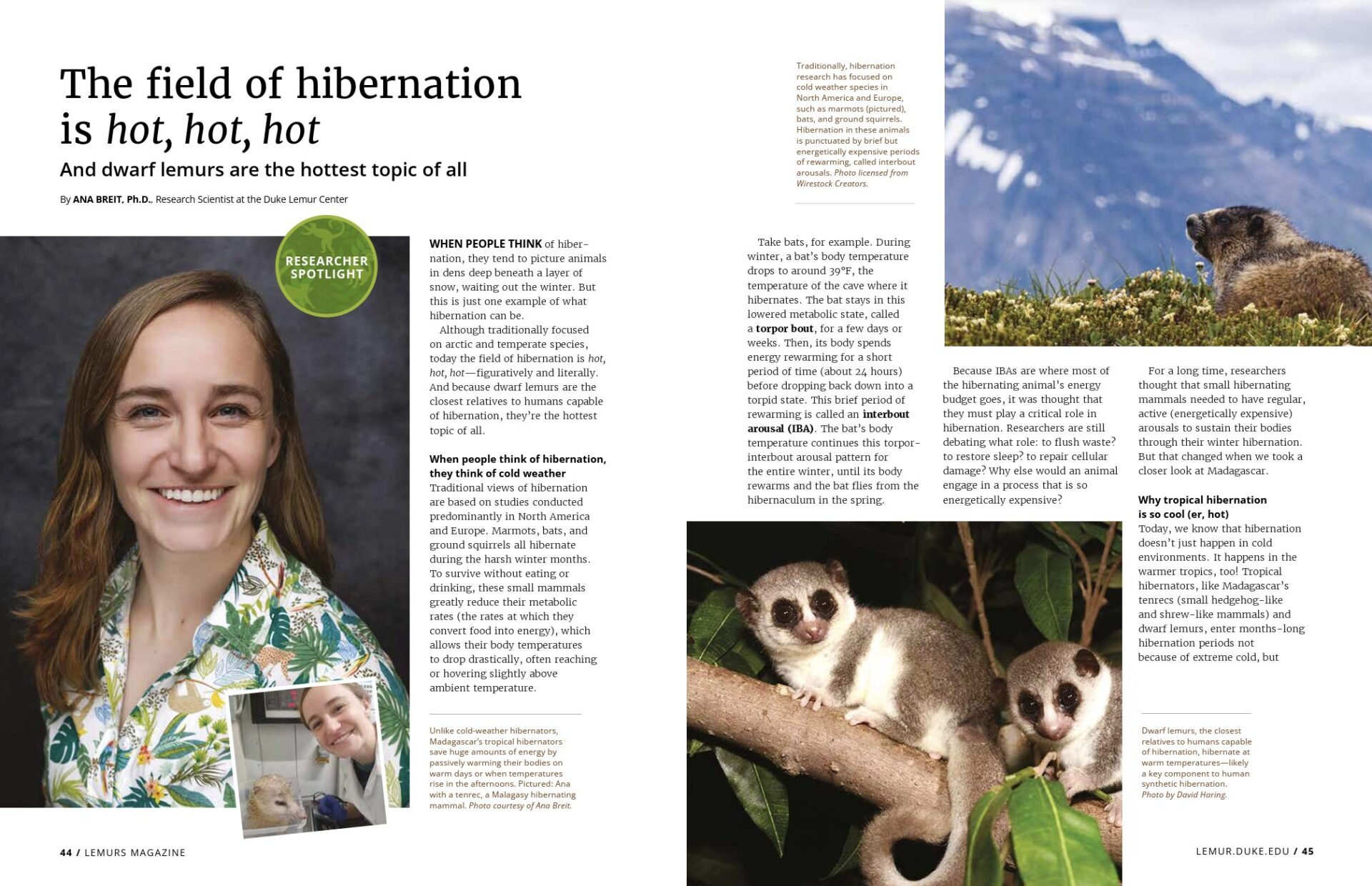
Researcher Spotlight: The field of hibernation is hot, hot, hot… and dwarf lemurs are the hottest topic of all
Although traditionally focused on arctic and temperate species, today the field of hibernation is hot, hot, hot—figuratively and literally. And because dwarf lemurs are the closest relatives to humans capable of hibernation, they’re the hottest topic of all. Read on the blog or on pages 44-47 of LEMURS Magazine: Reasons for Hope.

Lemur Dreams: Is hibernation an elixir of life?
Why do dwarf lemurs live so long—and can humans, too? Jonas, the world’s oldest known fat-tailed dwarf lemur, lived at the DLC and died just months shy of his 30th birthday. Non-hibernating mammals of similar size have much shorter life spans of just two to three years. Read on the blog or on pages 14-15 of LEMURS Magazine: The “Why” Issue.
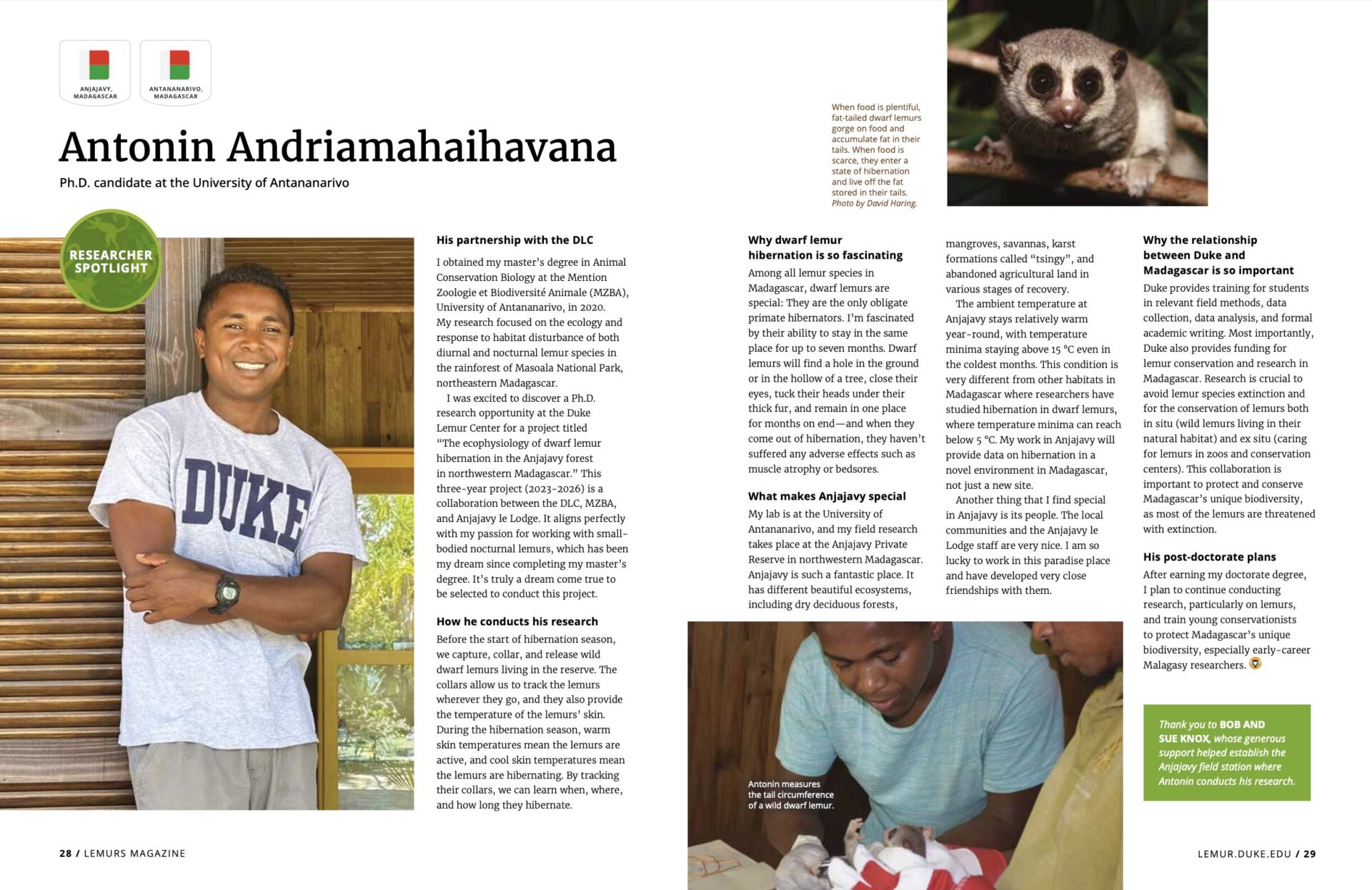
Researcher Spotlight: Studying dwarf lemurs in Madagascar
In addition to studying dwarf lemurs under more controlled conditions at the DLC, we also study dwarf lemurs in their natural environments in Madagascar, including our new research station at Anjajavy Reserve. This research can shed light into the long-term effect of habitat disturbance (such as forest fragmentation) on dwarf lemurs’ ability to hibernate and rely on alternative food sources. Read on the blog or on pages 28-29 of LEMURS Magazine: The “Where” Issue.
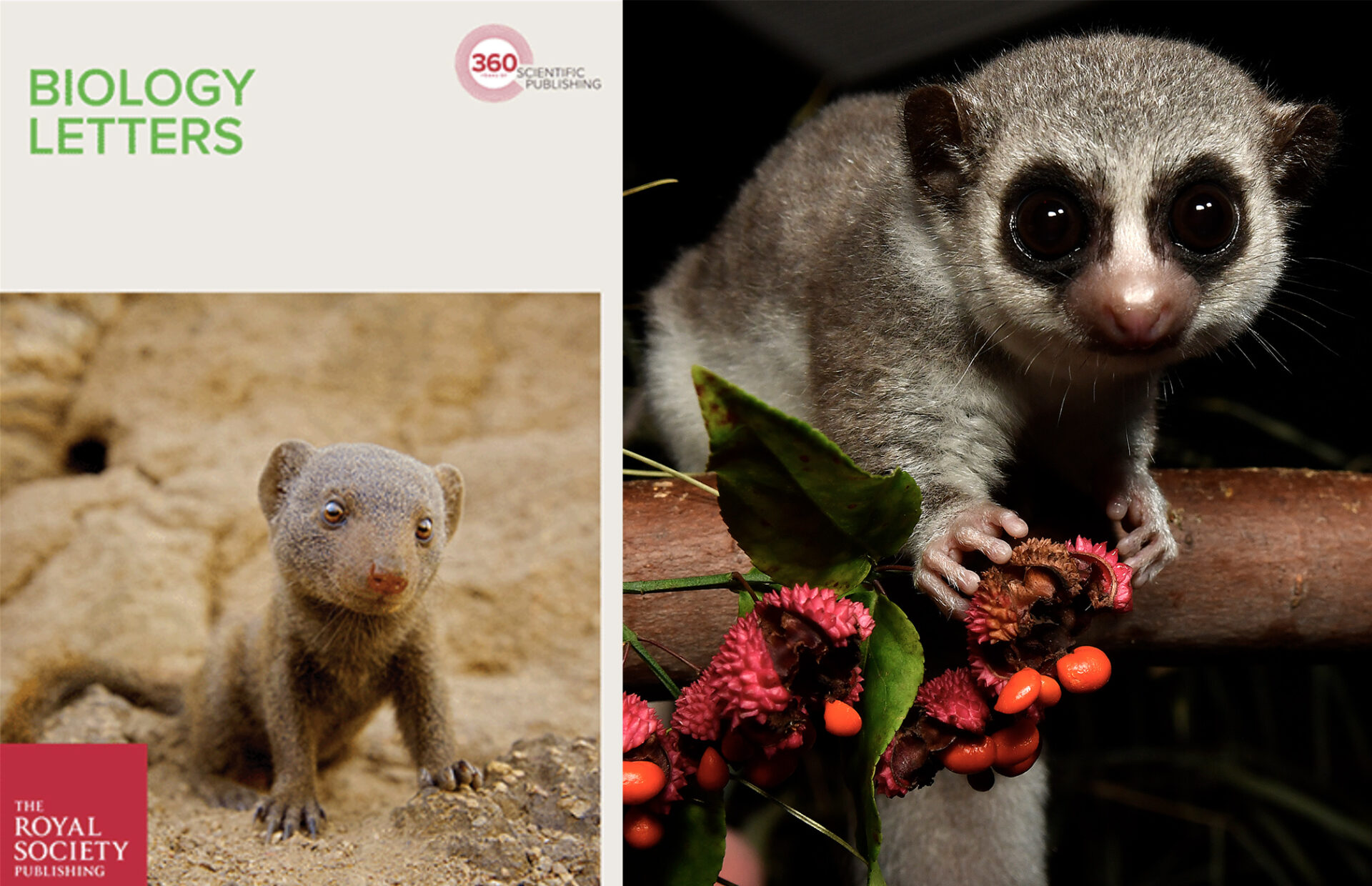
Hibernating Lemurs Can Turn Back the Clock on Cellular Aging
Many age-related changes start within our cells, even our DNA, which can wear and tear over time as we get older. But dwarf lemurs have come up with a way to reverse this process, at least temporarily. Figuring out how they do it may help researchers develop new ways to prevent or treat age-related diseases in humans without increasing the risks of runaway cell division that can lead to cancer. Read the article from Phys.org on the DLC blog and the original research published in the journal Biology Letters.
Published June 10, 2026.