Meet Zava!
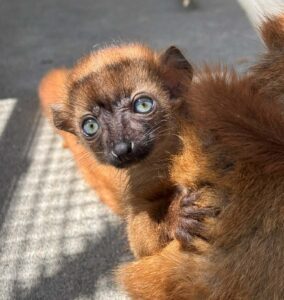
Blue-eyed black lemur infant Zava. Photo by Madison A.
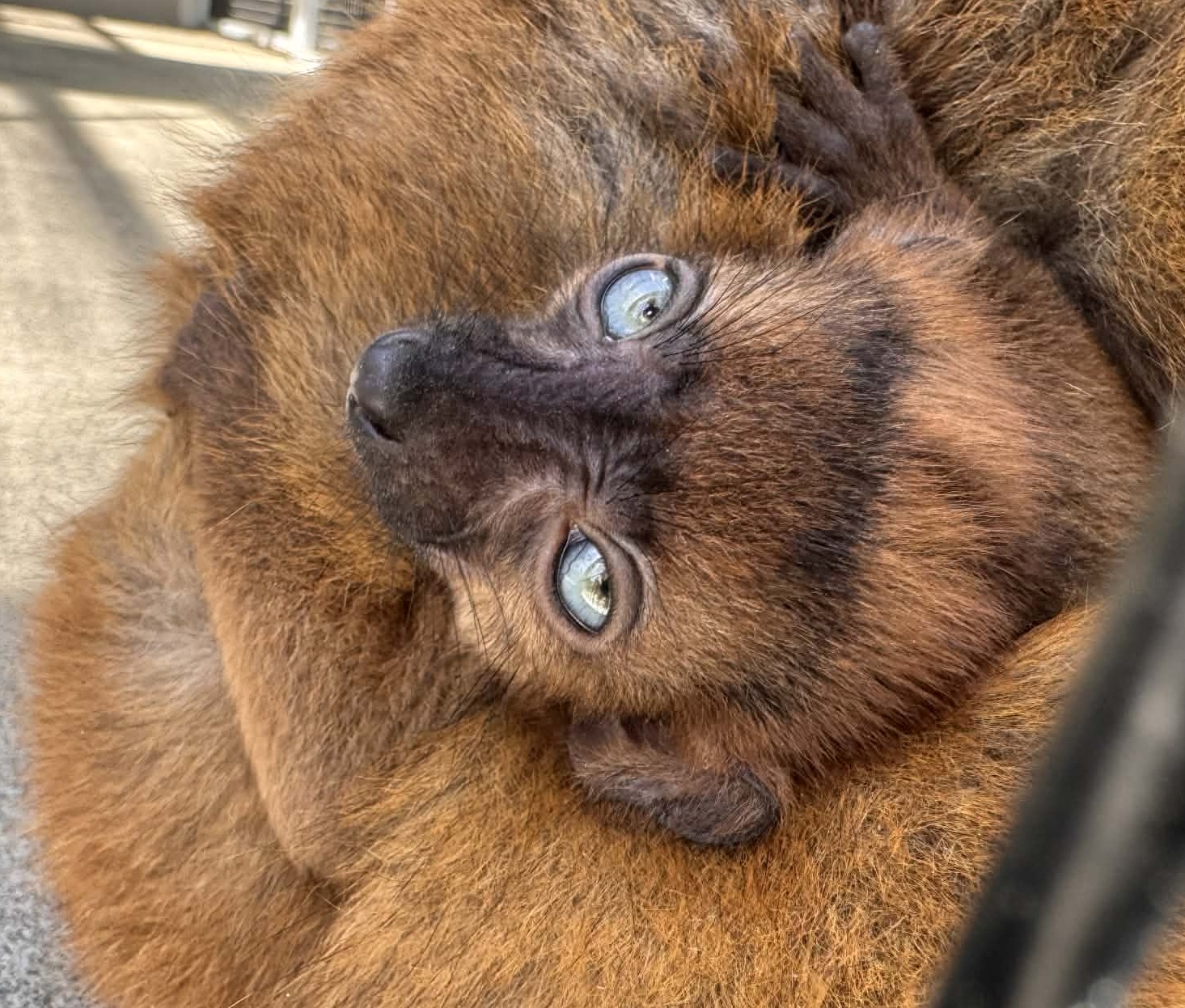
Critically endangered blue-eyed black lemur infant Zava was born on March 2, 2026, to parents Charlie and Mangamaso at a healthy 87 grams, slightly larger than her older sister Mitsiky’s birth weight. At two months old, Zava is incredibly curious, often climbing off of mom and onto the wire and branching in her enclosure. She’s quickly becoming independent and more comfortable exploring on her own. Keepers say that Zava has recently been seeking out time with dad Mangamaso and trying to participate in mom Charlie’s positive reinforcement training.
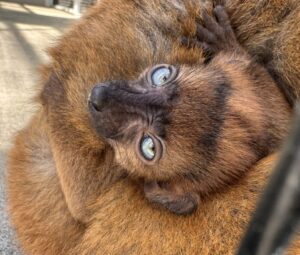
Zava, one month old, clings to mom Charlie. Photo by Madison A.
One-year-old Mitsiky has taken wonderfully to her new role as a big sister. She was a little stressed out when Zava was first born, as she had to be separated from her mom for the first few days, but she quickly calmed down once she was able to spend more time with her mom and baby sister. Mitsiky spends lots of time cuddled up with Charlie and Zava, engaged in vigorous sessions of mutual grooming. When Zava takes risky leaps from branch to branch, Mitsiky and Charlie are always ready to catch her before she falls.
Zava’s name, meaning “nature” or “clearness” in Malagasy, suits this little explorer well. “She is very observant of her environment,” says Kevin, the primary keeper for the family. “She loves to be outside. She looks at little insects with curiosity, sometimes even gently touching them.” Kevin also notes that Zava enjoys playing with bits of bark from the branches in her enclosure and staring up at the sky.
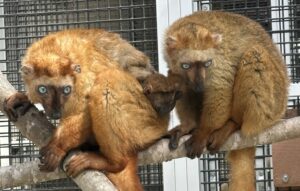
Mom Charlie, big sister Mitsiky, and baby Zava peer curiously at something on the ground while sunning in their screened-in outdoor patio. Look at the family resemblance! Photo by Isabella L.
Dad Mangamaso (whose name means “blue eyes” in Malagasy) was born at Parc Ivoloina, a nonprofit nature center in eastern Madagascar. In 2017, Mangamaso and his female companion Velona traveled 9,000 miles across land and sea to the Duke Lemur Center. Prior to the arrival of Mangamaso and Velona, every blue-eyed black lemur in North America descended from seven wild-born animals imported by the Duke Lemur Center in 1985 and 1990.
Blue-eyed black lemurs are among the most endangered primate species in the world, with possibly fewer than 1,000 individuals remaining in the wild, so maintaining a genetically diverse population of these lemurs in human care is a crucial safety net. Through two daughters with Velona and two daughters with Charlie, Mangamaso plays a valuable role in the survival of this critically endangered species.
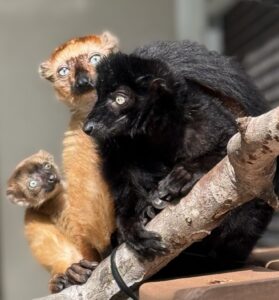
Parents Charlie and Mangamaso with baby Zava. Photo by Britt Keith.
Zava’s Ultimate Adoption Story
Zava was symbolically adopted—the first Ultimate Adoption of 2026—by a generous couple who wish to remain anonymous. When visiting the Duke Lemur Center and meeting the lemurs and staff of the DLC, they felt a strong connection with the Center’s work to learn from and protect lemurs and their natural habitat.
They chose to make their donation through an IRA/Qualified Charitable Distribution* (QCD) to the Duke Lemur Center’s Animal Care Fund, which qualified them for the honor of naming an infant through our Ultimate Adoption program.
Naming Zava has been a fun way for them to make a meaningful contribution toward the Duke Lemur Center’s impact while enjoying a special connection to Zava, her family, and the Duke Lemur Center’s animal technicians who care for them!
*What’s a QCD?
A Qualified Charitable Distribution (QCD) allows individuals aged 70½ or older to transfer up to $111,000 in 2026 ($222,000 for married couples) directly from an IRA to a charity, tax-free. Key benefits include satisfying Required Minimum Distributions (RMDs) without increasing taxable income, lowering Adjusted Gross Income (AGI), and supporting charities without needing to itemize deductions. LEARN MORE
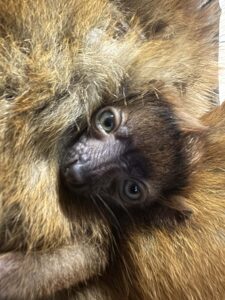
Zava at just two weeks old, tucked safely against mom Charlie’s belly. Photo by Madison A.
Support Us
Your support helps us to make extraordinary leaps for lemurs, conservation, research and education!
Explore our Adopt a Lemur Program or make a tax-deductible donation today! Questions? Contact Mary Paisley, Development Director, at 919-401-7252 or mary.paisley@duke.edu.