
Inauguration of a New Protected Area: The Ambanitaza Biocultural Landscape
Community-led Conservation for Long-term Stewardship
By James Herrera, DLC Director of Conservation. Published August 9, 2026.
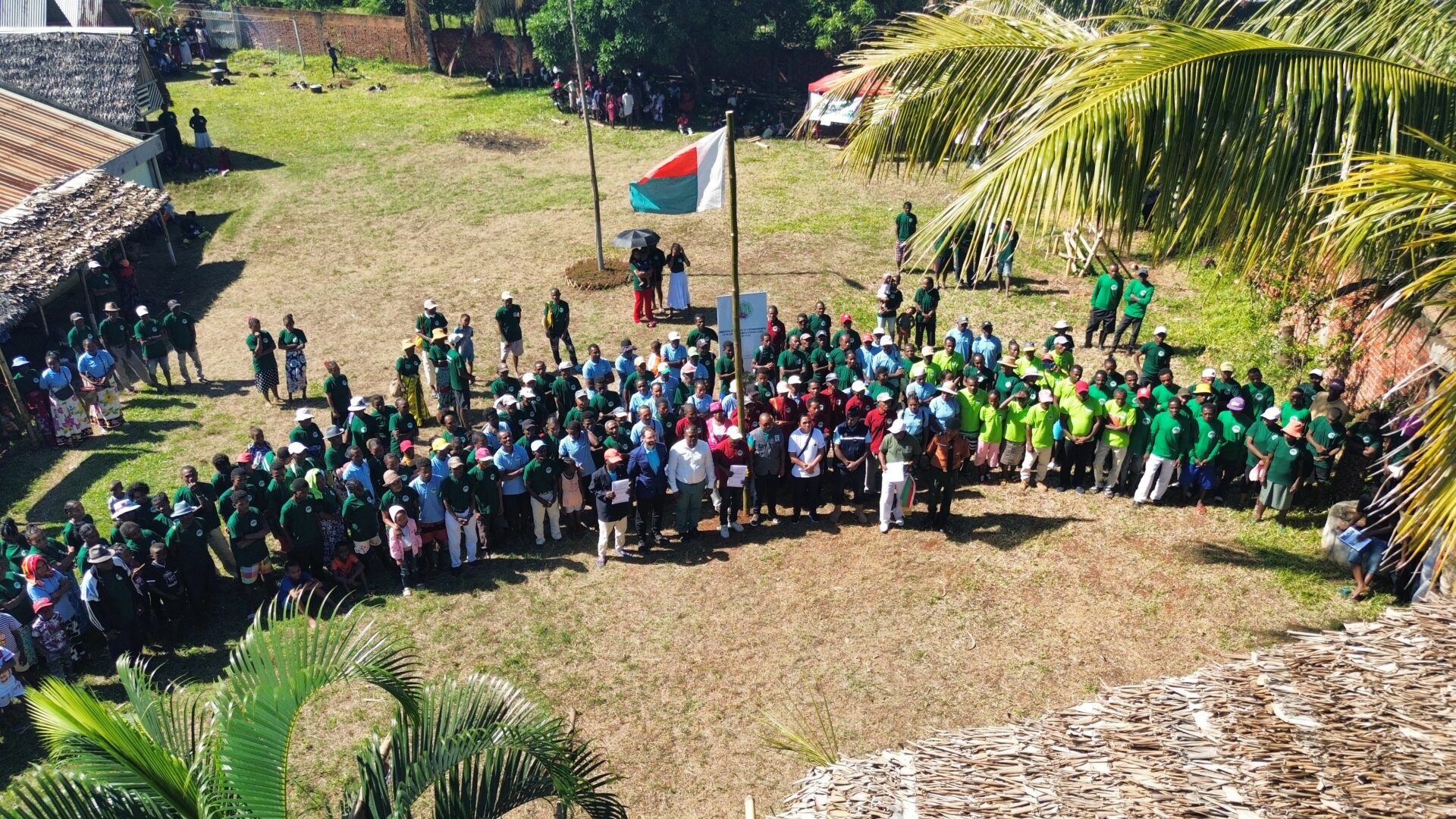
On July 9, 2026, a new protected area, Ambanitaza, was inaugurated after four years of planning, fieldwork, and deliberations. Nearly 1,000 attendees celebrated this grassroots initiative.
The protected area contributes to a worldwide movement toward socially just conservation, in that:
1) the communities who steward the landscape are the leaders in this initiative;
2) the landscape is predominantly farmland, with forest fragments that are vital to people and wildlife in an agricultural mosaic; and
3) the rights and access to land are co-created with the communities and local branches of government, in partnership with the Duke Lemur Center.
Beginnings
The initiative for this new protected area came from the communities in one rural county of northeastern Madagascar (Ampahana), who live around the Ambanitaza mountain and depend on this landscape for their livelihoods. They experience the negative repercussions of forest loss first-hand: rivers and rice fields are drying up, there are fewer trees to build homes, and the steep mountain slopes are eroding.
The eight communities, totaling nearly 5,000 people, came together across the 12,000-acre landscape to decree that their lands will be protected by customary laws that secure their rights to sustainably manage their natural resources in the long-term.
Starting in 2022 with just a handful of representatives from a few communities, the dream of a community-led protected area was nurtured. They sought partners and invited the DLC to visit their site and listen to their vision. The Lemur Center’s leadership was moved by their story and answered the call, and a legally recognized civil society organization was created to focus on forest stewardship.
Years were spent crafting locally respected laws and regulations on natural resource use. Months of laborious fieldwork went into delineating zones with different restoration regimes, resulting in knowledge exchange that respected national laws and local land tenure.

History, Need, and Sacred Spaces
The central mountain in the landscape is called Ambanitaza and is the source of streams throughout the watershed. According to local history, the first settlers came to the area in the 1600s. An Arab aristocracy was dispelled by the Sakalava ethnic group in Vohemar further north, and they sought refuge in the rugged forested mountains. According to aerial photos from the 1950s, most of the landscape was forested until that time.
From the 1940s-1980s, international logging companies were exploiting the forest, leading to emigration from other regions of Madagascar as people sought wage labor, and rapid population expansion occurred. The forest cover slowly declined.
Since the 2000s, a dozen high-intensity tropical storms (cyclones, aka hurricanes) devastated the forest. After the canopy trees fell, the sunbaked debris caught fire, which spread and smoldered through much of the remaining forest. What remains is a rim of forest fragments surrounding a tabletop of desiccated scrubland.

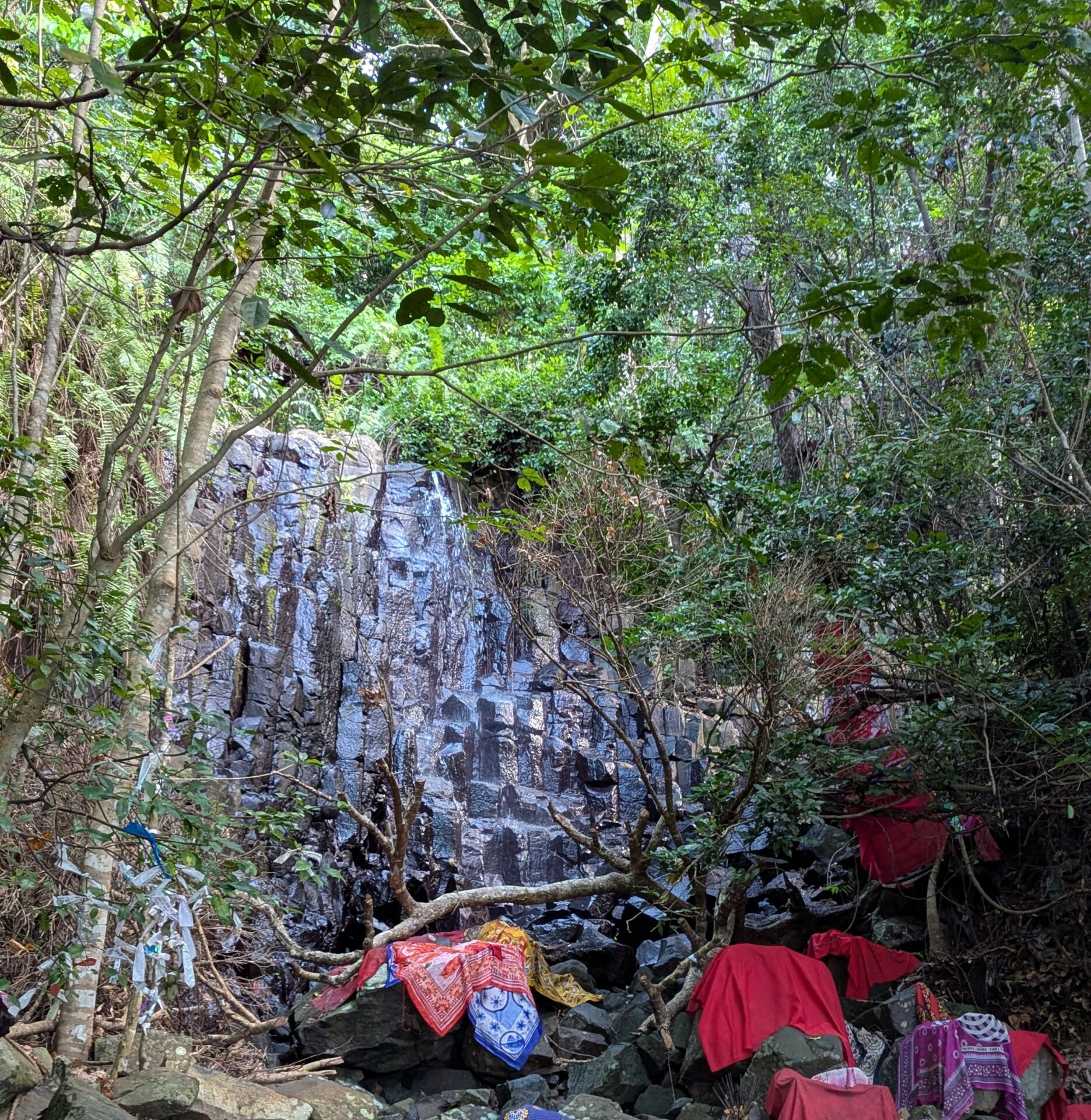
One of the many reasons to protect the Ambanitaza mountain is that there are sacred spaces respected by people from hundreds of miles around. A sacred waterfall provides pure water emerging from the steep cliffs at which people bathe and request benediction from the spirits of ancestors, healing illness and wounds, and cleansing the spirit.
The southern cliffs are called ‘Tsiafakolo,’ referring to the impossibly steep and dangerous terrain where legend has it that the ancient Arab prince committed suicide.
For these reasons and more, the mountain is protected by the respectful stewardship of local communities.
Restoration
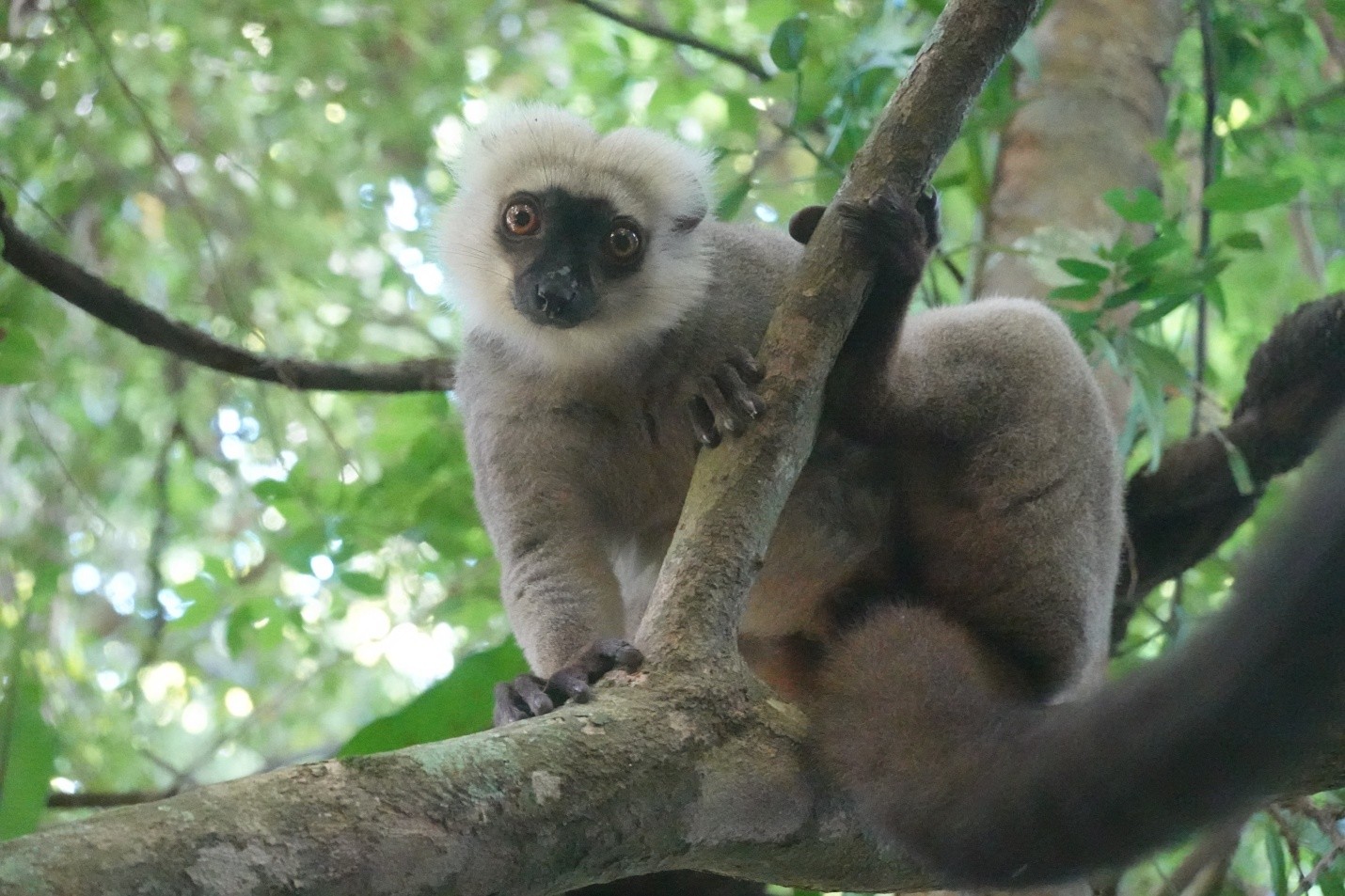
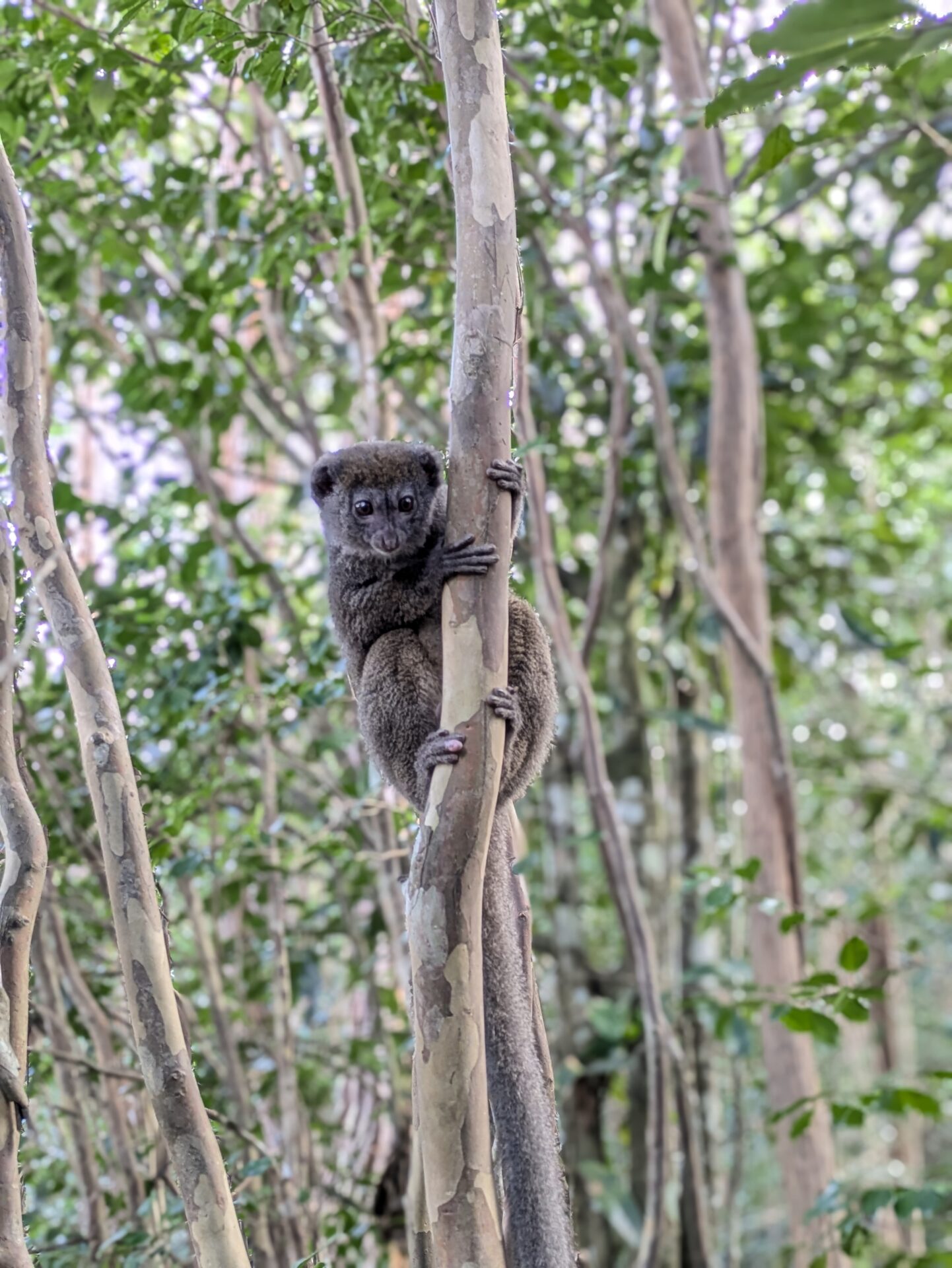
The communities partnered with the DLC for four years to restore ~200 acres of the barren mountaintop and protect another 200 acres of remaining forest. Over 150,000 trees were planted, and monitoring and maintenance show that over half are thriving, creating both a canopy and soil to support the natural regeneration of diverse native species. Native lemurs, birds, and even rare endemic carnivores can be found at Ambanitaza, including the fossa.
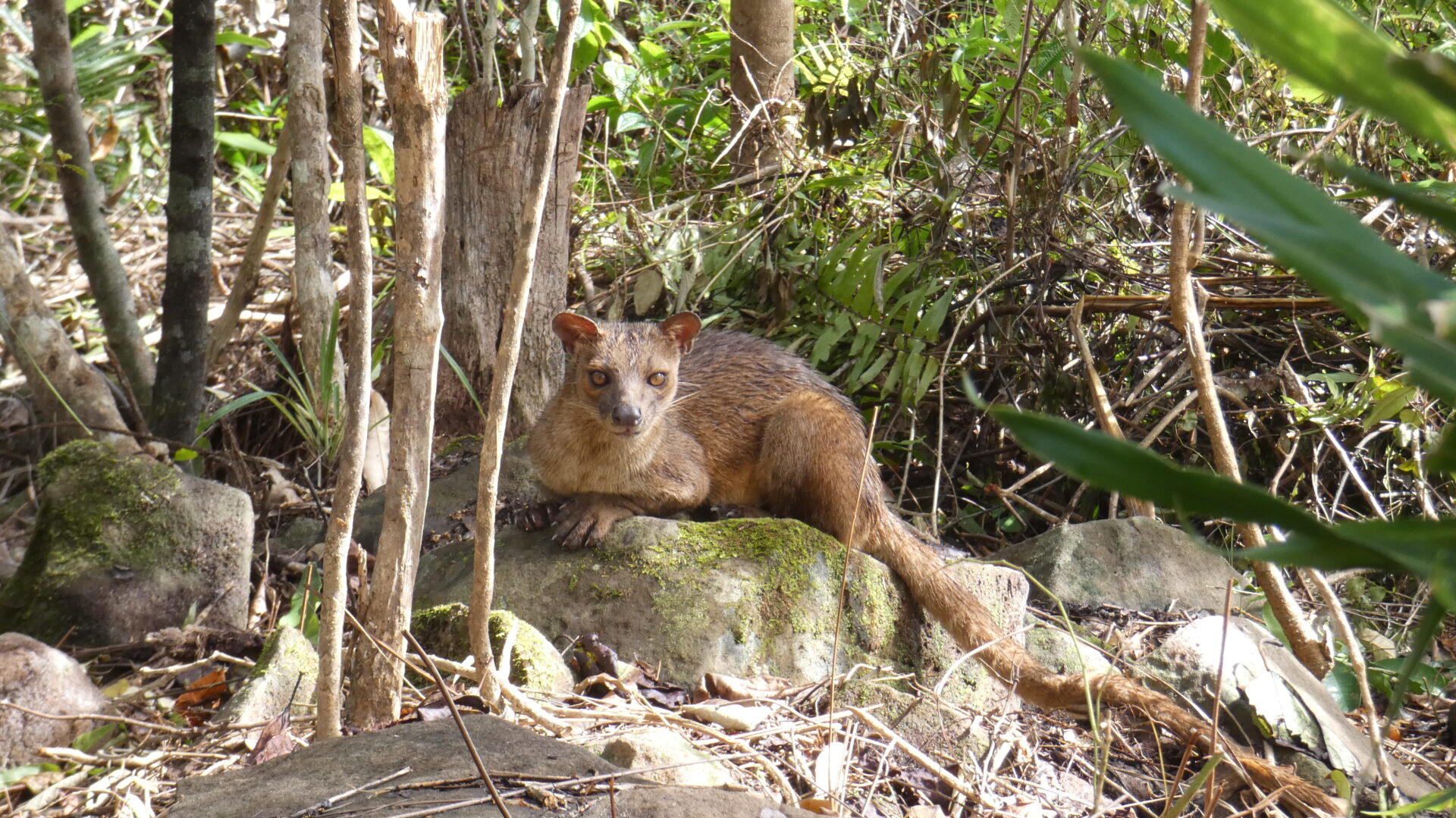
In addition to restoring natural forests on the mountain, the communities partner with the DLC to restore their farmlands using diverse agroecology principles and practices that lead to productive and permanent agriculture across the landscape. Agroforestry practices combine diverse food, native, and cash crop trees with annual food crops and small-scale animal husbandry, aligning local short-, medium-, and long-term goals for environmental and economic sustainability.

Inauguration of the New Protected Area
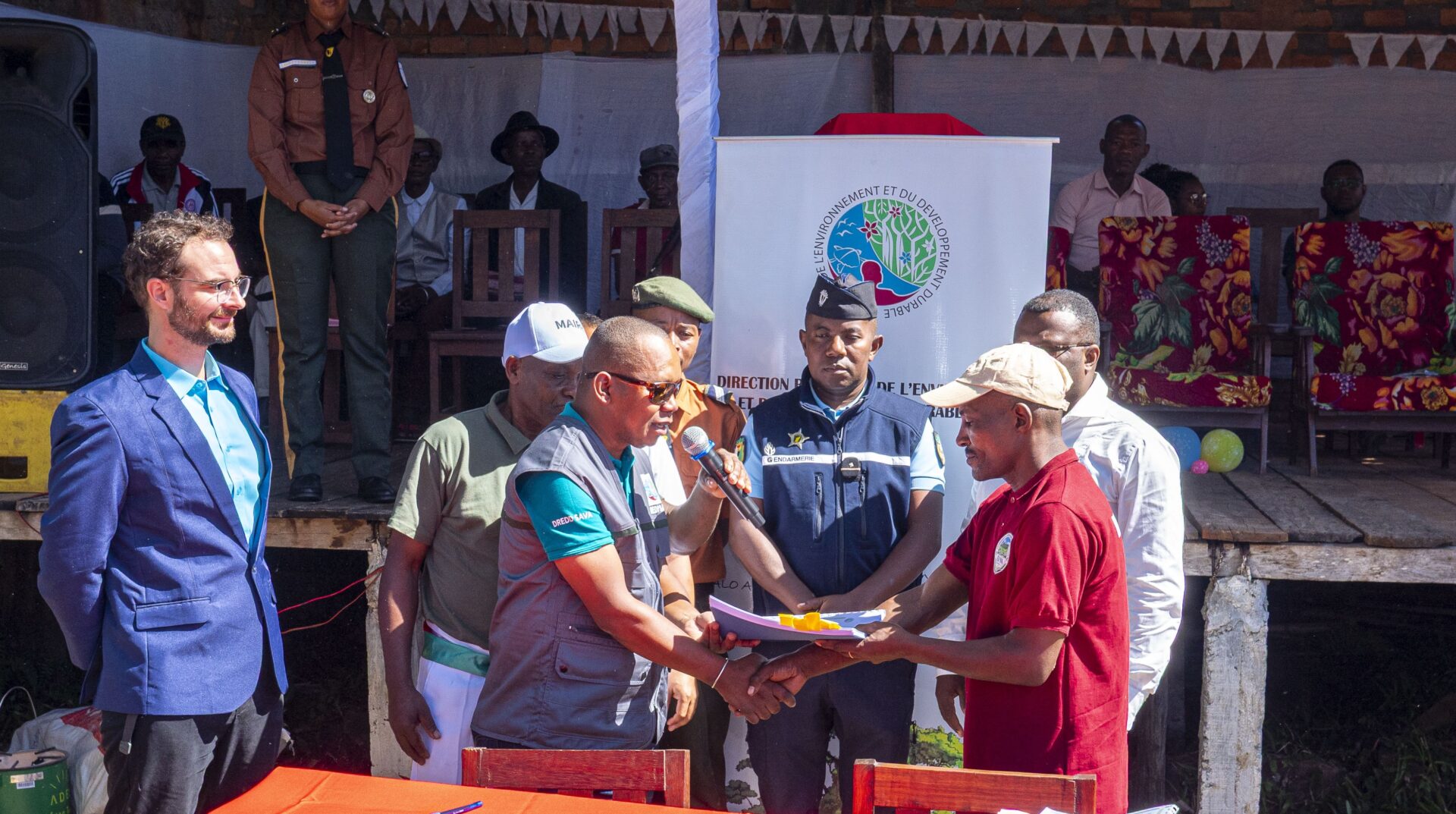
Government officials responsible for forest resource management signed the official treaty to transfer management rights and responsibilities to the local civil society organization. The legal rights to landscape management now rest proudly in the hands of the communities.
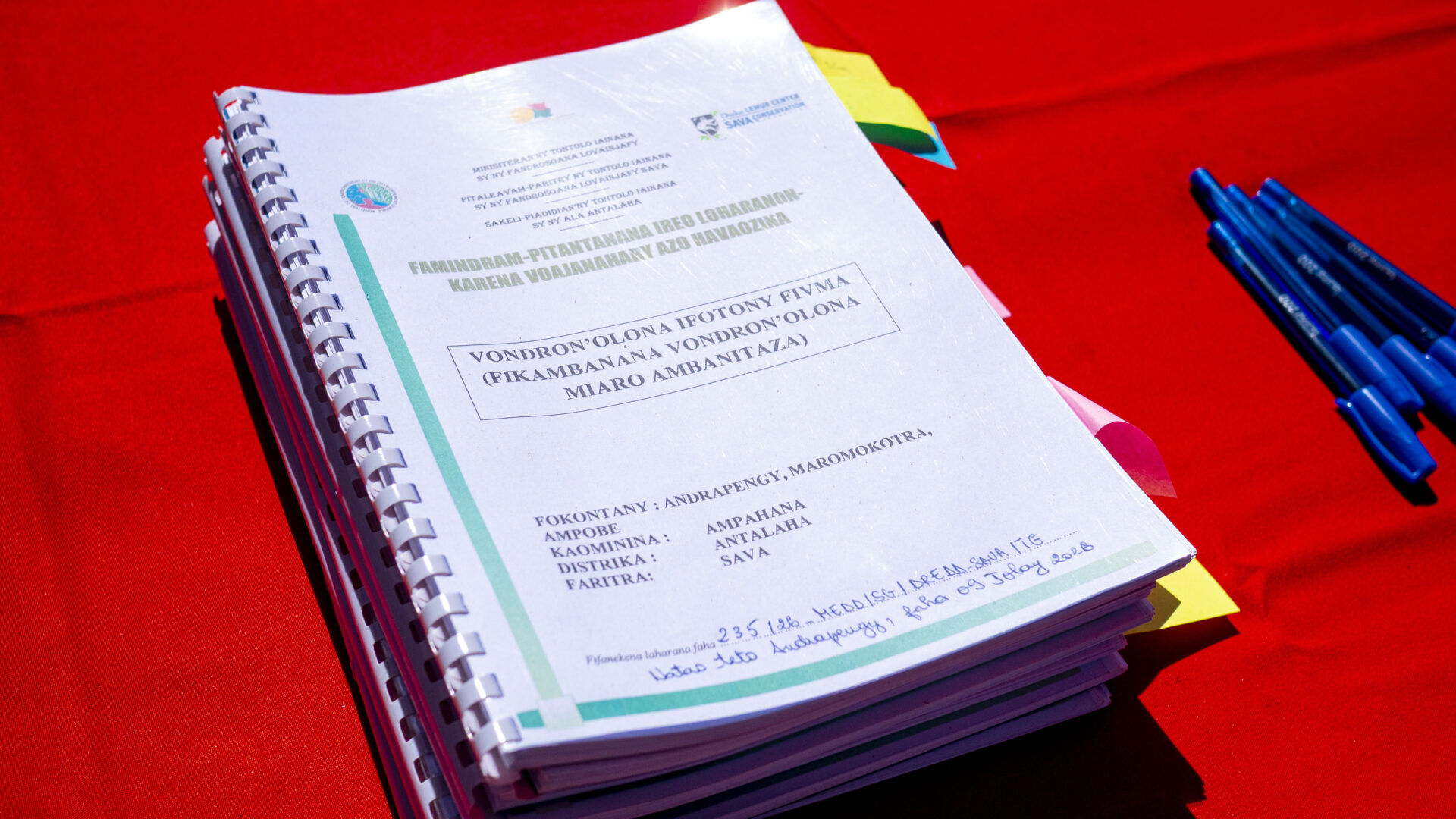
The treaty, signed by all local authorities
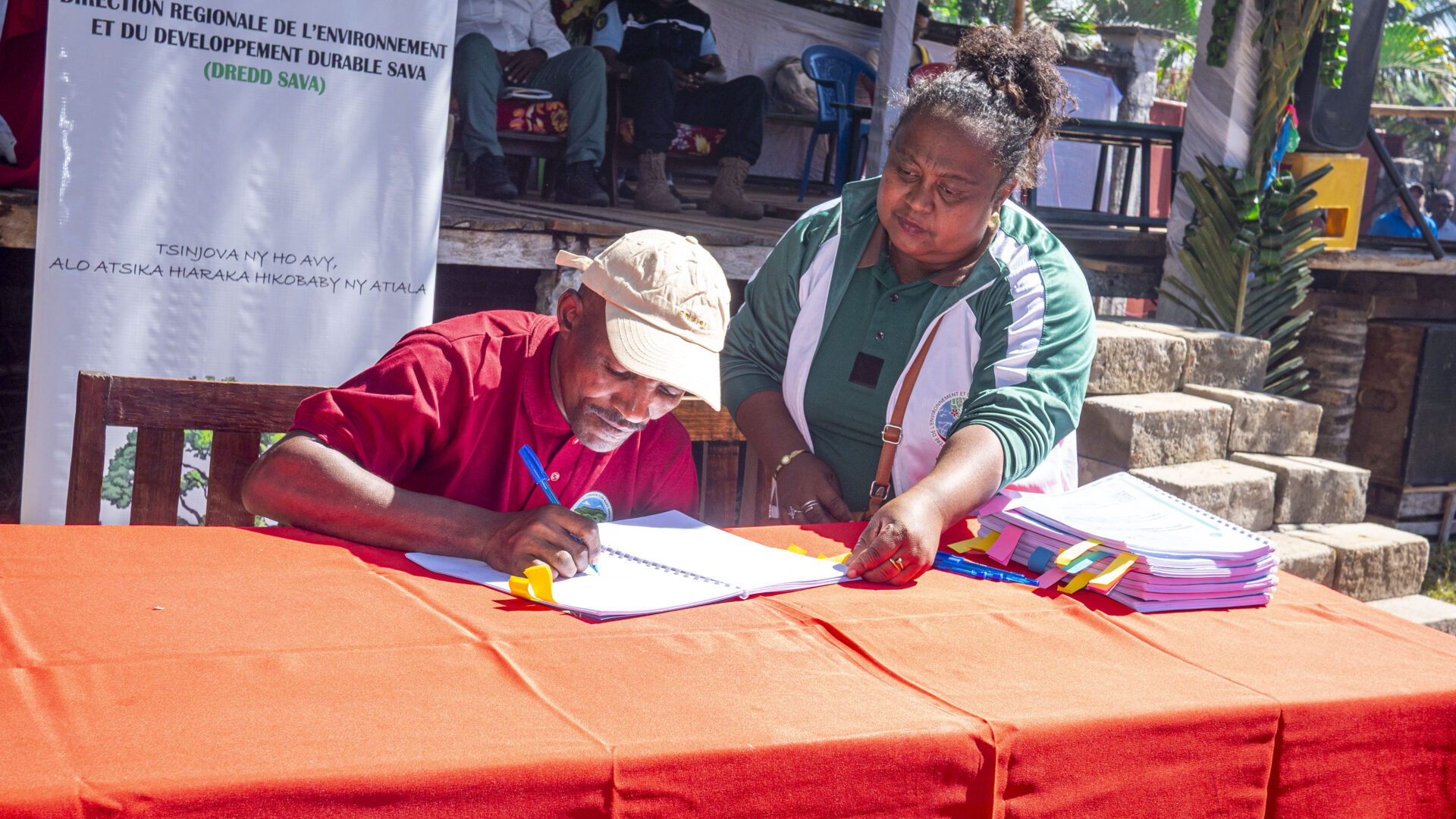
The president of the civil society organization leading the protected area signs the treaty
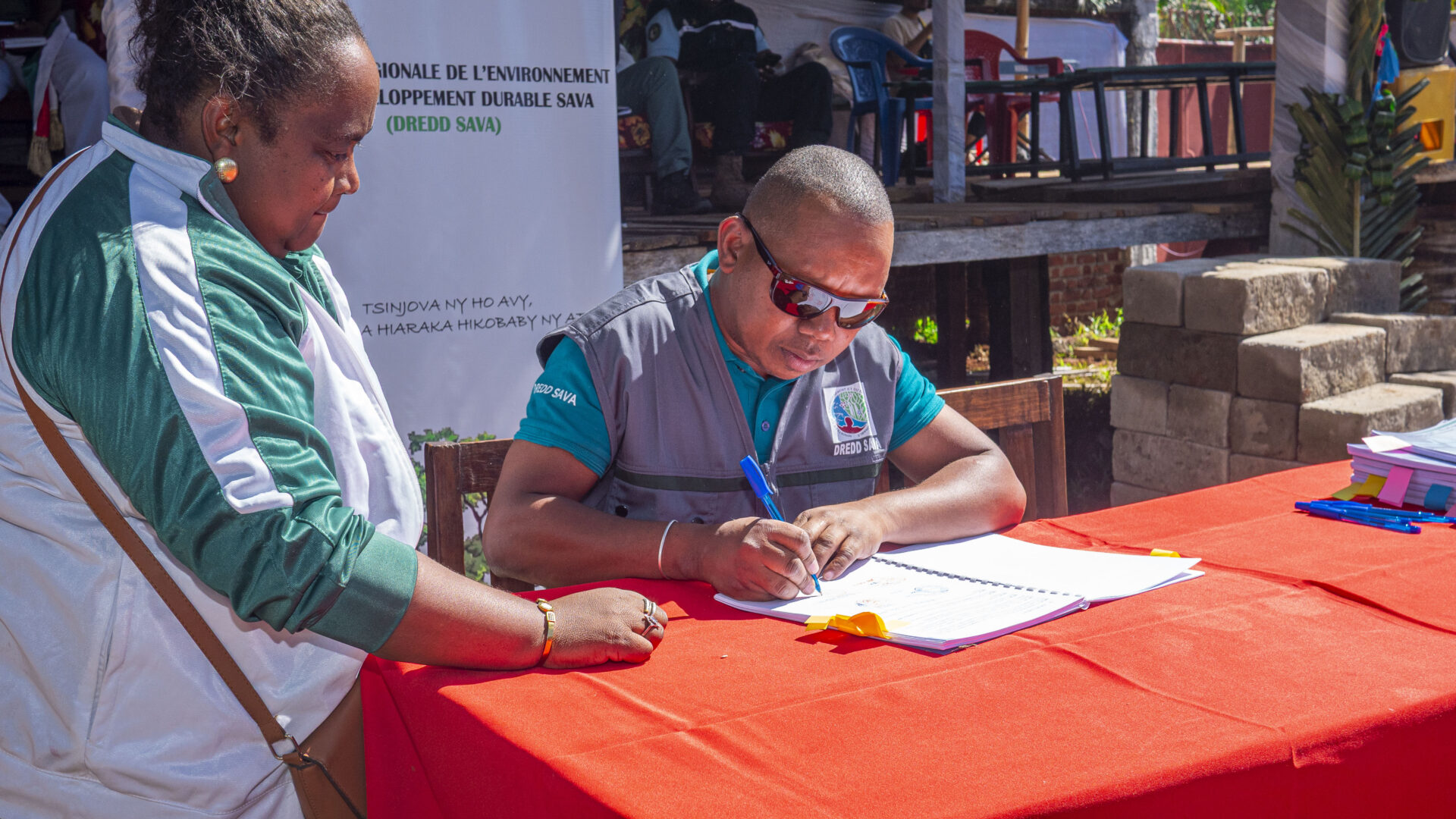
The regional director for the Ministry of Environment signs the treaty
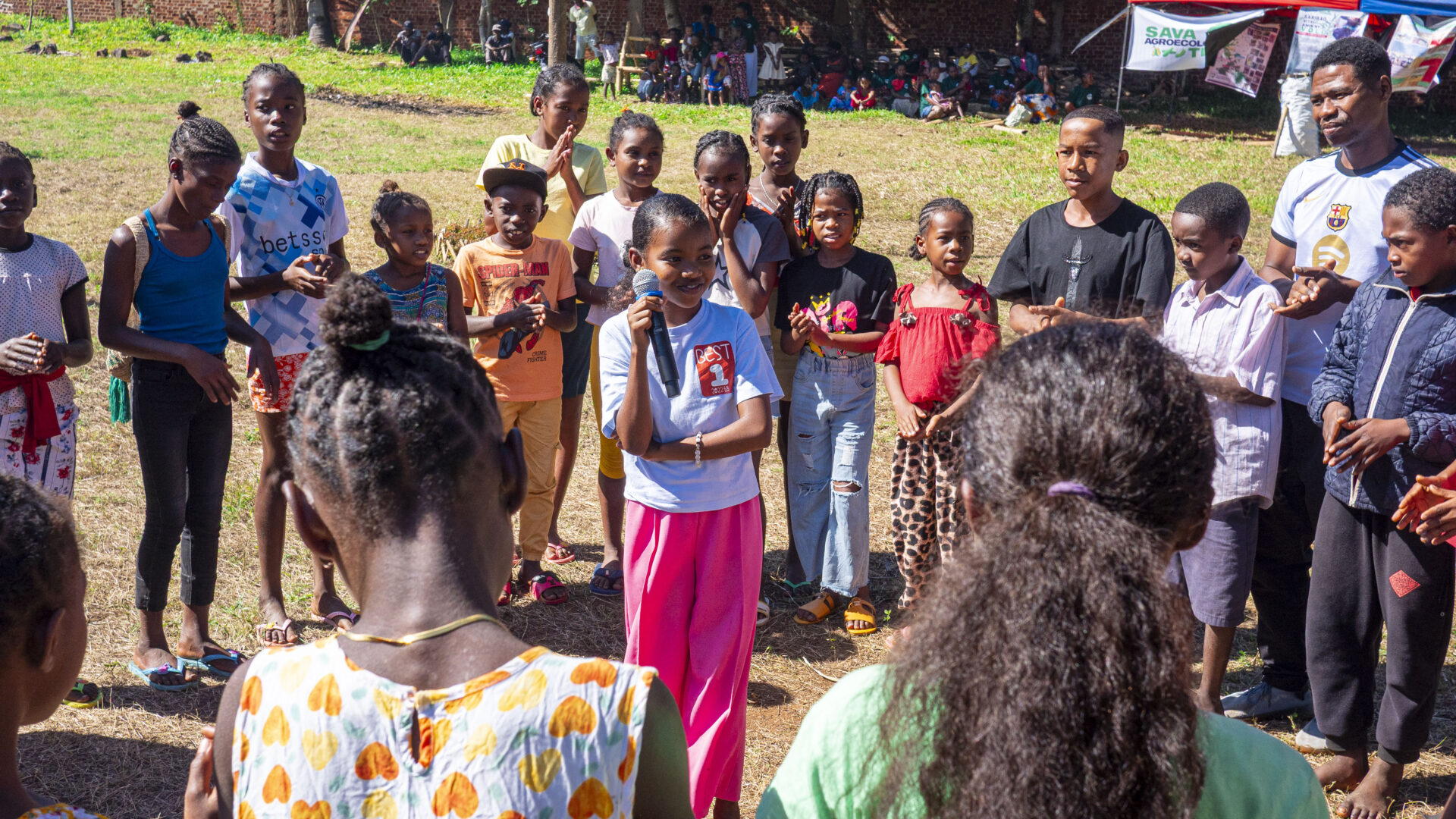
The communities proudly celebrated this milestone in traditional style, showcasing local talents such as speeches, song and dance performances by the women’s groups and school, a skit by the children about protecting lemurs, and the sacrifice of two bulls. A feast followed, sharing meat and rice with all attendees. Evening events included a dance for the children, viewing several videos that featured the evolution of the project, further feasting, and an all-night dance party that will surely be remembered for years to come.
The event received national media attention, and was featured on television by multiple news stations and on their social media pages (like here, here, and starting at minute 9 of this news station).
The Duke Lemur Center looks forward to many years to come supporting the Ambanitaza project, partnering closely with communities and local governance to ensure just conservation that meets the needs of communities and wildlife. Through mutual respect, solidarity, love, and compassion for each other and the natural world, true sustainability can be attained.
Personal and ethical notes:
I recognize my own positionality as an American male academic who has been working in Madagascar for most of the last 20 years, and for most of the last 4 years has been living in the northeast leading the DLC SAVA Conservation project. I recognize the power dynamics that can result from an outside entity influencing lives and norms in rural Madagascar, especially with the role we play in financial support, and I avoid imposing my values on a community that deserves autonomy and sovereignty. I respect both local and international norms in terms of labor laws, transparency, and social justice (e.g., Free Prior and Informed Consent).
We aimed to be especially cognizant of coercion, from our own biased perspective as well as engaging government agents in this work. The transfer of legal management to the civil society organization is not possible without government agent approval, and our engagement with local entities in governance is handled with transparency and fairness.
Our goal over the next 3-5 years is for the Ambanitaza civil society organization to be a thriving and largely independent institution. We will remain steadfast partners in this effort to empower the rightful stewards who are best positioned to govern this landscape.