Reasons for Hope
An Earth Day message from Executive Director Greg Dye, posted on April 28, 2026.
On Earth Day 2026, Duke Lemur Center Executive Director Greg Dye hosted a virtual gathering for supporters and friends, sharing a perspective grounded in realism and guided by hope.
“Earth Day isn’t just about acknowledging what’s at risk. It’s also about recognizing what still works, what’s worth protecting, and the real progress we can point to, together.”
Greg acknowledged that the challenges facing Madagascar’s ecosystems and communities remain immense. At the same time, he emphasized that the Duke Lemur Center’s work continues to demonstrate the value of long-term commitment, scientific research, and meaningful partnerships. From advancing world-class research here in Durham to supporting community-led conservation efforts in Madagascar, the DLC model is intentionally holistic.
“We don’t just study lemurs,” Greg emphasized. “We invest in people, ecosystems, and futures.”
“Real conservation success doesn’t happen in isolation, it happens through trust, collaboration, and showing up year after year.”

Strengthening the Duke Lemur Center’s academic future
During the event, Greg also announced that the Duke Lemur Center will soon welcome its first-ever Academic Director, an important step in expanding the Center’s academic reach while strengthening opportunities for student engagement, research, grants, and long-term sustainability.
Dr. Elizabeth Lonsdorf, a Duke alumna and current faculty member at Emory University, will join the Duke Lemur Center as Academic Director beginning August 1.
In this role, Dr. Lonsdorf will work strategically with Duke faculty and students, build new connections across Duke schools and units, and help grow and coordinate the DLC’s research programs in Durham and in Madagascar.
The position was created in collaboration with the Provost’s Office, signaling strong institutional support. Funding for the role has been secured through a generous grant from The Duke Endowment, ensuring stability as the role is established.
A shared commitment to hope
As he closed his Earth Day remarks, Greg expressed sincere appreciation for the supporters who make the Duke Lemur Center’s work possible. He emphasized that our hope is rooted in the strength and engagement of the Duke Lemur Center’s community of donors, researchers, staff, volunteers, students, and advocates who believe deeply in the mission.
“Everything we do… every lemur cared for, every student trained, every community partnership supported, happens because people like you believe this work matters. That belief is one of our greatest reasons for hope.”
For more details, read Greg’s full presentation below.

How you can help
We invite you to be an integral part of what makes the Duke Lemur Center’s work possible. Whether through a gift, sharing our mission with a friend, or staying engaged with our research and conservation efforts, your support helps transform hope into lasting impact.
- View our current top funding priorities
- Make a donation today
- Explore ways to give
Questions? Contact Mary Paisley, Development Director, at 919.401.7252 or mary.paisley@duke.edu.
Greg’s remarks
Due to issues with the audio of the recorded Zoom session, we are providing Greg’s full speech:
Good afternoon and Happy Earth Day! I’m Greg Dye, the Executive Director of the Duke Lemur Center, and we’re so glad that you’re joining us today!
It’s been several years since we held a large Zoom event, but with the rising travel costs we thought utilizing Zoom fit better with our conservation mission and the mission of Earth Day, which is to raise awareness about environmental protection and promote action against climate change, pollution and deforestation—all things the DLC cares deeply about.
In celebration of Earth Day, we are embracing this opportunity to share with our most loyal supporters from all over the world several recent developments and our plans for the coming year and our most promising opportunities for the future. It is these initiatives and projects that give us hope for the future of the lemurs and forests of Madagascar. As part of this celebration, we also want to hear from you since it’s your continued support that makes so much of what we do possible. If you have questions please type them into the chat feature at any time and our staff will collect them for the Q&A section following my presentation.
As we look to a new academic year in just a few weeks, we are excited to announce that the Duke Lemur Center will be welcoming its first academic director, Dr. Elizabeth Lonsdorf. This position was created in collaboration with the Provost’s Office and will work strategically with Duke Faculty and students to leverage new connections and opportunities with other Duke schools and units with the goal of growing the Lemur Center’s research programs here in Durham and in Madagascar. Dr. Lonsdorf is a Duke alumna and is currently a faculty member at Emory University. She will begin her new role with the Lemur Center on August 1st. The Provost has also secured four years of funding for this position through a grant from The Duke Endowment.
As we look forward to Dr. Lonsdorf’s arrival, we are greatly enjoying having our newest Malagasy veterinary intern, Dr. Zoavina Randriana, on site. For those of you not familiar with this program, the Lemur Center hosts a Malagasy veterinarian on site for an intensive three-month hands-on internship with our veterinary team. Zoavina is the seventh veterinarian to participate in this program. The goal of this experience is to provide advanced lemur medical training to these veterinarians that they can then share with veterinary students and colleagues when they return to Madagascar. The impact of this program continues to exceed our expectation and given its success we are working to develop a pilot program similar to that for medical students. As human medicine has become more and more specialized, this externship experience would expose the students to a more holistic approach in diagnostic and treatment strategies taking into account the patient’s environment. Additionally, our veterinary team is continuing to advance lemur medicine by working with university researchers on a new acute phase protein testing program that identifies markers of inflammation in Coquerel’s sifakas in the early stages of illness to allow for earlier medical intervention.
Later this summer, members of our Museum team will be returning to the field with students to search for fossils. As you may remember, the Lemur Center’s Museum of Natural History (previously known as the Division of Fossil Primates) houses one of the rarest collections of fossil primates in the world. They connect the story of lemurs to the story of humans. Many of these early primate fossils came from the mountains and foothills of Wyoming and Utah. If you go back to the Eocene period, more than 50 million years ago, Wyoming and Utah were subtropical and home to the first lemur-like primates. Our team uses these sites as valuable hands-on learning opportunities for students and to collect fossils that that help us better understand primate evolution. Our Museum team, led by Dr. Matt Borths, will also be returning to Madagascar, working in collaboration with our colleagues at University of Antananarivo and the American Museum of Natural History to study the rate of extinction in Madagascar. This work is critical to understanding the impacts of climate change around the world by collecting data to better inform how best to mitigate its effects. We understand that by studying the past we are better able to protect our future.
As Matt and the Museum team prepare to head to the field, the Lemur Center’s research team, led by Dr. Erin Ehmke, is celebrating the completion of another successful hibernation season with our fat-tailed dwarf lemurs. As many of you know the fat-tailed dwarf lemur is the only member of the primate family that hibernates and the Duke Lemur Center is the only facility to house a breeding population of this species outside of Madagascar. Thanks to several donors we have also been able to build a new field station in northwestern Madagascar. This incredible resource is already supporting the work of students like Antonin who is currently a PhD candidate from the University of Antananarivo and is working with DLC’s research scientist, Dr. Ana Breit, to replicate our hibernation research with wild fat-tailed dwarf lemurs. Antonin recently spent two months training with our research team at the Lemur Center, working with Dr. Breit on data analysis for his dissertation dataset and to continue training with the dwarf lemurs and the respirometry equipment setup for these studies. The data collected from this in-house and field collaboration has significant translational potential for human health, from diabetes, coma management, space travel and more. We are very excited about the future of this program and the increasing number of collaborators we are engaging with from around the world.
In addition to fat-tailed dwarf lemurs, our team is doing a lot of work internationally with the critically endangered Coquerel’s sifaka. Later this year, members of our curatorial team led by Britt Keith, colony curator will be returning to Madagascar to support a critical collaboration to protect this species. For the fourth year in a row, Britt will be working with the Malagasy Ministry of the Environment and Sustainability to develop national standards for the care of lemurs in private Malagasy parks. As part of this initiative, Britt has been working with four private parks that house Coquerel’s sifakas. Under Britt’s guidance, the Ministry and parks have created the very first Malagasy studbook for any lemur species. Later this fall, Britt will use the newly published sifaka studbook to conduct the first population planning session with this team to implement animal moves between the parks to help them maintain the genetic diversity of these groups. This is big achievement, as these animals are so important to maintaining the international genetic safety net that protects this critically endangered species from being lost forever if they become extinct in the wild.
And now that spring is here, the lemurs have returned to the forest. As many of you know, the ability for many of our lemurs to have access to the forest is great for their physical and mental wellbeing. Two years ago, we worked with the university to protect this experience for the lemurs by implementing a behavioral requirement that required the lemurs to be secured in their indoor enclosures at the end of each day—100% of the time. This meant that if an animal failed to come inside when the recalled signal was initiated, they would lose their free-ranging privileges. So our Curator of Behavioral Management and Wellbeing, Meg Dye, got to work with our animal care technicians and developed a training program to teach the animals what this new sound meant and worked with them until we were confident in their response. This new forest management system had an unexpected benefit- the animals are so reliable with coming in each afternoon that they actually get to free range significantly more year-round because they can have access to the forest on warm days during the fall and winter. This means we get to see more of this (play video of lemurs in a forested free-ranging enclosure) in the forest. That footage was taken last week and documents an important infant development milestone of the infants coming off mom to explore their surroundings. We look forward to hosting many of you in the forest this summer.
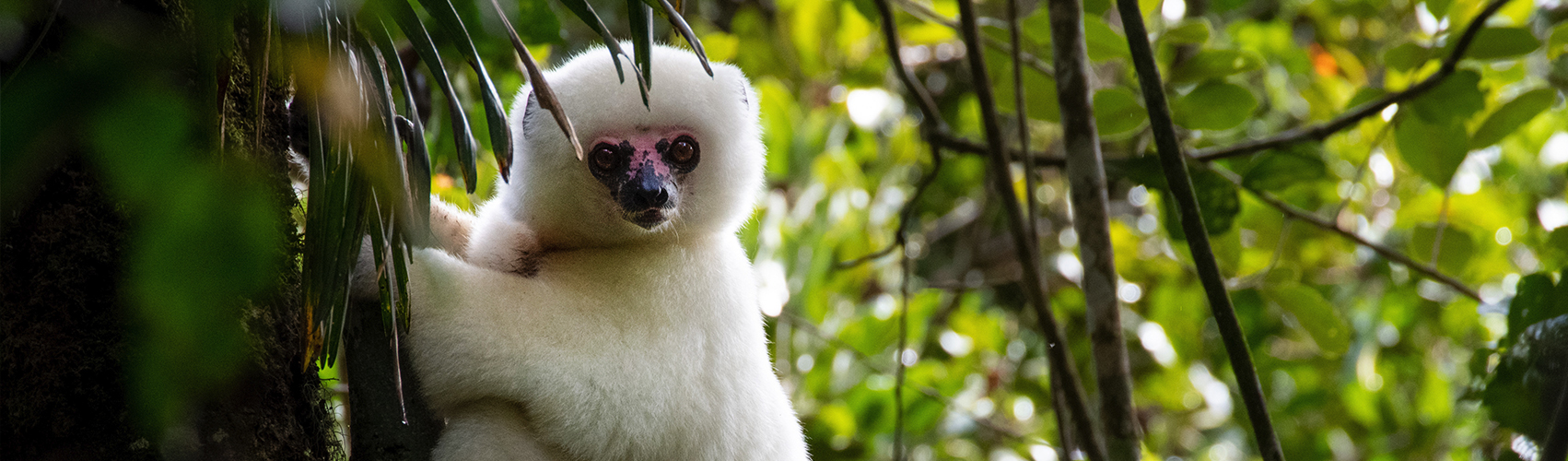
In Madagascar, our SAVA Conservation program, now under the leadership of Dr. James Herrera, continues to grow. James has negotiated a new partnership with the World Wildlife Fund to increase our lemur monitoring, specifically of the silky sifaka, in protected areas of the COMATSA Sud and COMATSA Nord which encompasses approximately 90,000 hectares. This partnership will also provide funding for biannual monitoring of priority conservation targets and work with local communities, especially school-aged children about the importance of biodiversity. James and his team are continuing their important work with local communities to increase access to free women’s health and reproductive services which provided services to more than 2,200 women in 30 communities last year, and recently the Ministry of Health rolled out a new HPV vaccine campaign that James and his team assisted with raising awareness of the importance of this program.
The SAVA team continue to provide training for regenerative agriculture, chicken husbandry, and bamboo charcoal production. Many of these programs have inspired entrepreneurship within the communities and James and his team are facilitating other services to help these ventures grow. Over the last three years, the team has helped start nine Village Savings and Loan Associations. These associations are a microfinance mechanism that increases financial literacy and resilience in rural communities. Members are inspired with new ideas for income generation and financial security- like ways of transitioning their funds from a household coffer to a registered bank account for safety, and how to make value-added products like fruit preserves and plantain chips for income generation. Some of the Village Savings and Loan Associations are transferring their agroecology skills to produce tree seedlings of high-value crops like coffee and cloves which sell for added income. These are a few of the complex-interwoven programs the SAVA team are pioneering to protect the flora and fauna of Madagascar.
Finally, I want to take a moment to once again thank you for your continued support. None of what I just shared would have been possible without your generosity and friendship. You fuel our hope. Next year we will be entering the final year a grant from the National Science Foundation that provides funds for key staff and animal food and bedding. We have been notified we are ineligible to extend this grant, which represents a loss of more than $250,000. In response to these growing needs, we have developed opportunities for our supporters to endow key positions and programs that align with their values and interests. If you have an interest in learning more about these opportunities, please contact Mary Paisley.
At this time, I am going to introduce our leadership team as we switch to the Question and Answer portion of this presentation. We’d like to hear from as many of you as possible. (End of Greg’s presentation.)