
Meet Lanitra!
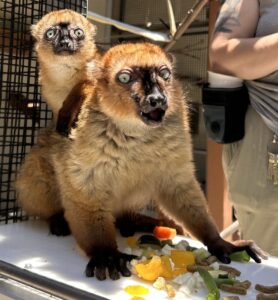
Lanitra perches atop mom Malala’s back during a positive reinforcement training session with their keeper. Photo by Sarah M.
We’re so excited to announce our SECOND critically endangered blue-eyed black lemur infant of the year!
On April 1, 2026, blue-eyed black lemur Malala celebrated her fifth birthday AND gave birth to her first daughter! Lanitra was born to first-time parents Malala and Brady at a healthy 83 grams, which is just about the average for a female infant of this species. The DLC’s veterinarians noted that Lanitra was strong and vocal during her infant wellness exam.
Lanitra and mom Malala share more than just a birthday. Megan Chapman, the primary keeper for the family, has noted that Lanitra looks and acts like a mini-me of her mom. “She follows her everywhere,” Megan explains. “Malala is just so beautiful, and she looks exactly like her.”
When choosing a name for Malala and Brady’s daughter, Megan wanted to honor another exciting event that happened on April 1, 2026: the launch of NASA’s Artemis II mission. Lanitra (“lah-NEE-trah”) is the Malagasy word for sky, which also suits the infant’s sky-blue eyes.
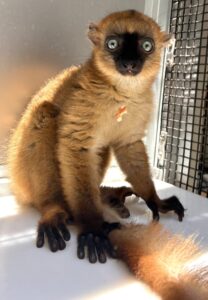
“Lanitra is starting to get more bold,” explains Keeper Megan. Photo by Sarah M.
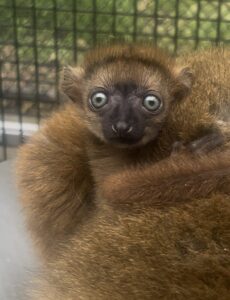
One-month-old Lanitra stares curiously up at the camera while mom Malala voluntarily weighs herself on a scale. Photo by Megan Chapman.
Conserving a Critically Endangered Species
Blue-eyed black lemurs are among the most endangered primate species in the world, with possibly fewer than 1,000 individuals remaining in the wild, so maintaining a genetically diverse population of these lemurs in human care is a crucial safety net.
Last year, Mitsiky was the only blue-eyed black lemur infant in human care, in any facility around the world. This year, having not one but two infants of this critically endangered species born in our care is an important step in preventing these incredible animals from going extinct.
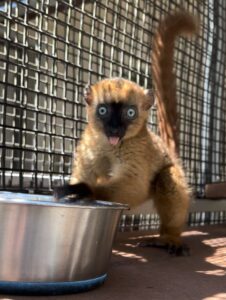
Lanitra, independent from mom, drinks cool water on a hot summer day in the family’s screened-in outdoor patio. Photo by Megan Chapman.
Malala is the daughter of Velona and Mangamaso, two blue-eyed black lemurs born at Parc Ivoloina, a nonprofit nature center in eastern Madagascar. In 2017, the pair traveled 9,000 miles across land and sea to the Duke Lemur Center. Prior to the arrival of Mangamaso and Velona, every blue-eyed black lemur in North America descended from seven wild-born animals imported by the Duke Lemur Center in 1985 and 1990. In 2018, they gave birth to their first daughter, Ranomasina; three years later, little sister Malala was born.
Lanitra’s dad Brady is descended from many generations of lemurs who have lived at the Duke Lemur Center, including current DLC residents Leigh (his mom) and Margret (his grandmother). With a mother only one step removed from Madagascar and a father descended from generations of lemurs in North America, Lanitra is a testament to the Duke Lemur Center’s dedication to caring for and conserving the world’s most endangered group of mammals.
Support Us
Your support helps us to make extraordinary leaps for lemurs, conservation, research and education!
Explore our Adopt a Lemur Program or make a tax-deductible donation today! Questions? Contact Mary Paisley, Development Director, at 919-401-7252 or mary.paisley@duke.edu.

Three-week-old Lanitra and mom Malala cuddle up on a shelf. Photo by Britt Keith.