Skip to content

Research

A thumbnail of a video showing a veterinarian from Madagascar examining a ruffed lemur at the Duke Lemur Center's veterinary hospital. The veterinarian wears blue scrubs with DLC logo, a stethoscope, and gloves.
Share
Follow Us

Remembering Aristides

Posted July 30, 2025. Ring-tailed lemur Aristides, one of the Duke Lemur Center’s oldest residents, died on July 21, 2025 at the age of 32. Over the course of his three decades at the DLC, Aristides played a key role in non-invasive research studying lemur intelligence. He first made headlines in a 2004 article in […]

Updates from the International Primatological Society (IPS) Congress in Madagascar

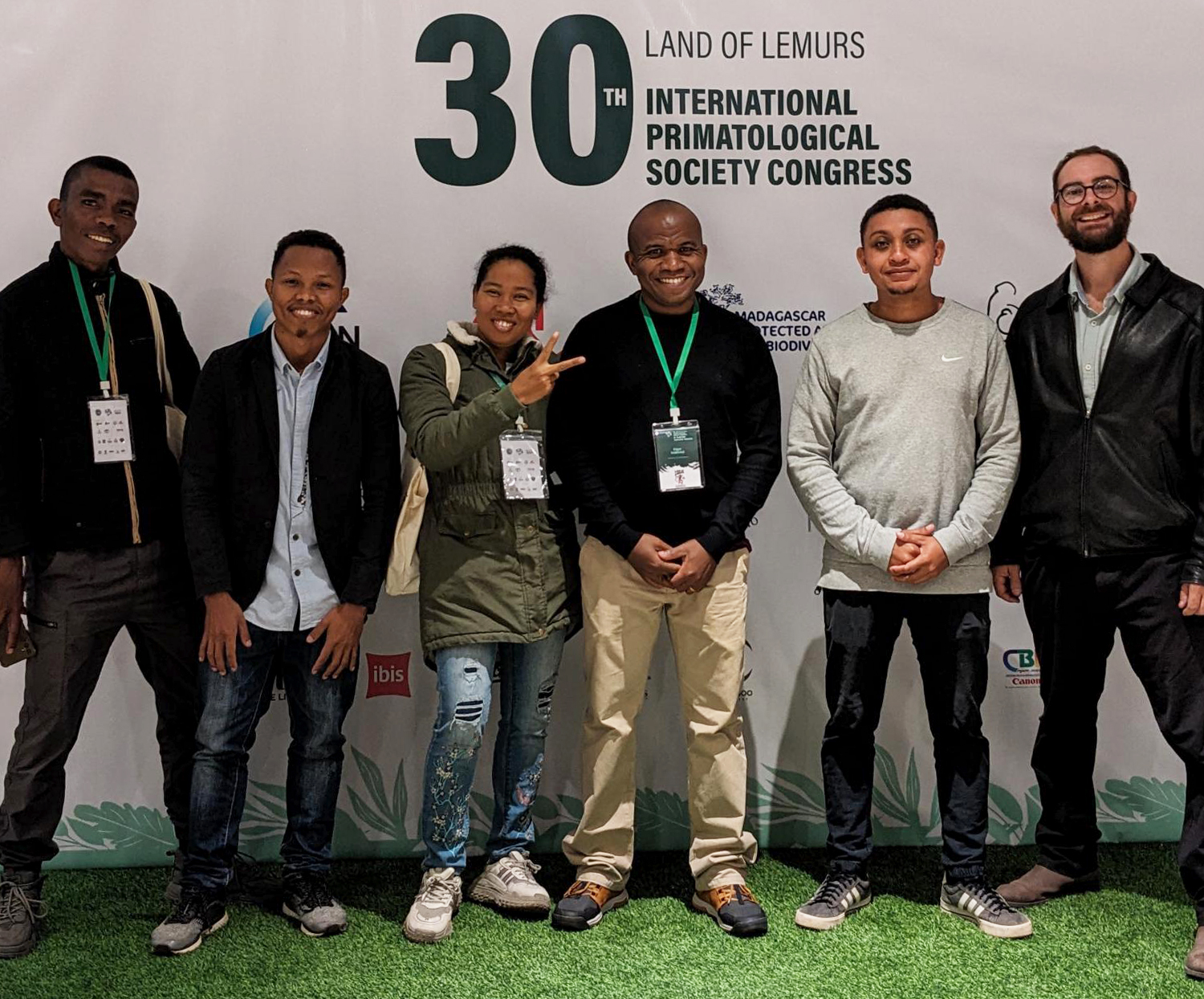
By James Herrera, Ph.D. and DLC staff. Posted July 20, 2025. This week, the 30th International Primatological Society (IPS) Congress is proudly being hosted by Madagascar, for the first time since 1998! The IPS is dedicated to the study, conservation, and welfare of primates in the wild and within human care. Its biannual Congress is […]

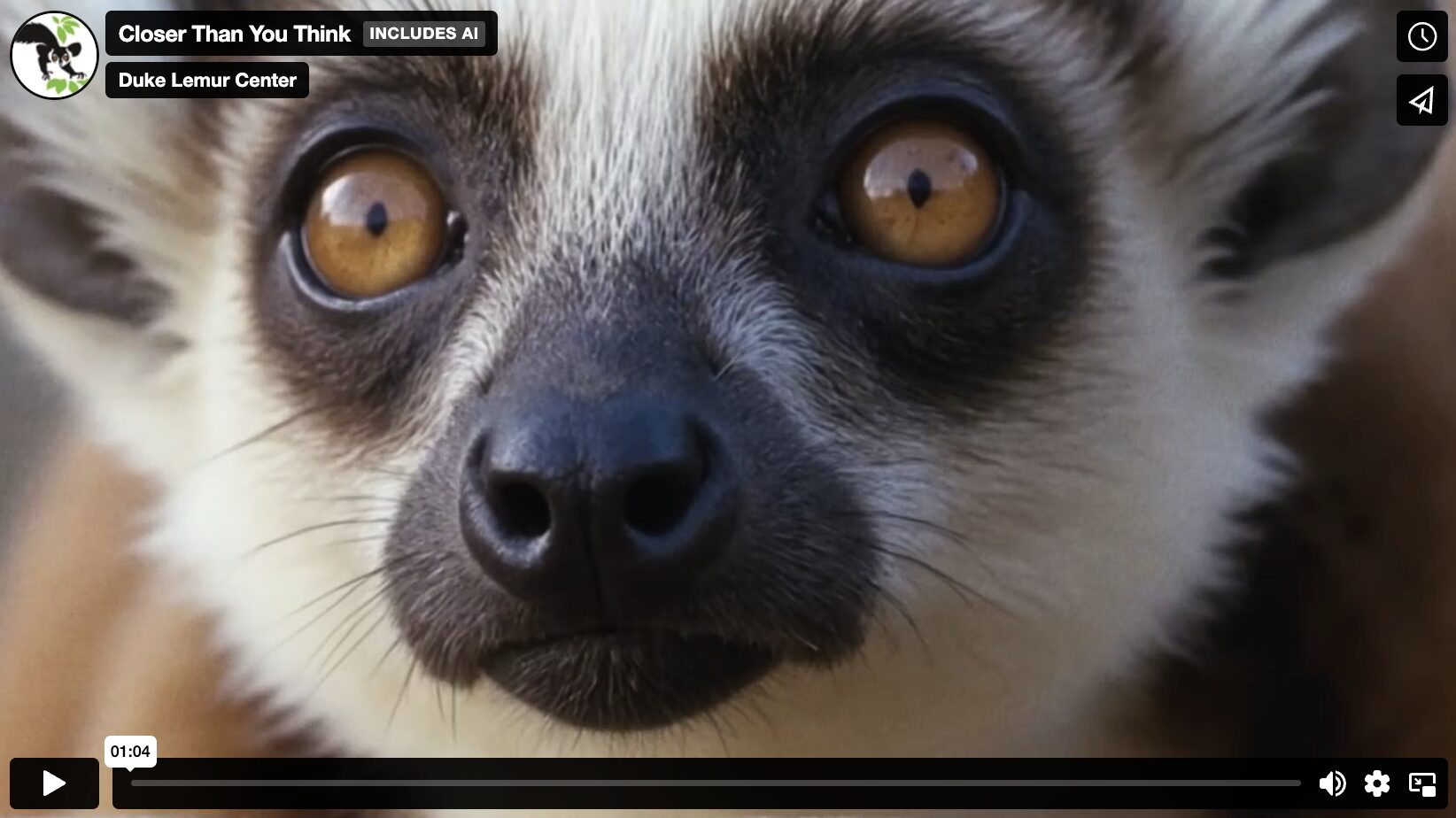
VIDEO: “Closer Than You Think” Wins the Gold in Advertising Competition

  Established in 1966, the Duke Lemur Center is a world leader in the study, care, and protection of lemurs—Earth’s most threatened group of mammals. In this new video, we’ve partnered with CYLNDR Studios to explore a fresh way to tell our story. By responsibly using AI tools, we were able to create visuals that […]

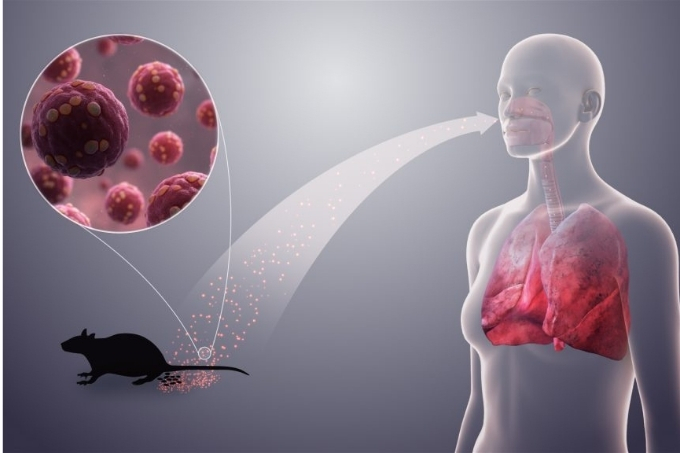
A diagram illustrating the transmission of hantavirus from rodent droppings to humans.

Could Restoring Forests Reduce Disease Risk? A Case Study of Hantavirus in Madagascar

By James Herrera, Ph.D. Originally published in Duke TODAY on April 8, 2025.   COVID-19 continues to plague us, Mpox is an emerging global threat, and the avian flu is decimating industrial poultry as well as endangered wildlife. What do all these epidemics have in common? They originated in wild animals and spread to domestic animals […]

RESEARCHER SPOTLIGHT: Camille DeSisto

Written by Camille DeSisto, Ph.D. candidate at the Duke University Nicholas School of the Environment. Originally published in LEMURS Magazine: The “Where” Issue in February 2025. Ecologists study the relationships between living things, including humans, and their environment. By studying the complex ways that plants and animals are connected to each other and the world around […]

How Changes in Lemur Brains Made Some Mean Girls Nice

By Robin Smith, Ph.D. Originally published on the Duke Research Blog on April 21, 2025. Read the original here. If there was a contest for biggest female bullies of the animal world, lemurs would be near the top of the list. In these distant primate cousins, it’s the ladies who call the shots, relying on physical aggression […]

Hibernating Lemurs Can Turn Back the Clock on Cellular Aging

Originally published on Phys.org on March 11, 2025. Read the original here. We’re all familiar with the outward signs of aging. The face that greets you in the mirror each morning may have sagging skin or thinning hair. But many age-related changes start within our cells, even our DNA, which can wear and tear over […]

Karie, wearing ear protection, goggles, and a face mask, works on a large gray fossil.

Meet Duke’s Fossil Finders

By Stephen Schramm, Working@Duke Senior Writer. Originally published in Duke Today on February 19, 2025. Read the original and see the accompanying photos here.  Monthly open houses at the Duke Lemur Center Museum of Natural History offer glimpses of work behind evolutionary discoveries As the Madre de Dios River flows through Peru toward the Amazon, […]