Originally sent as our “Best of Spring” eNewsletter on May 4, 2026. Join our email list to be the first to receive our newsletters in the future! Updates are sent four to six times annually.
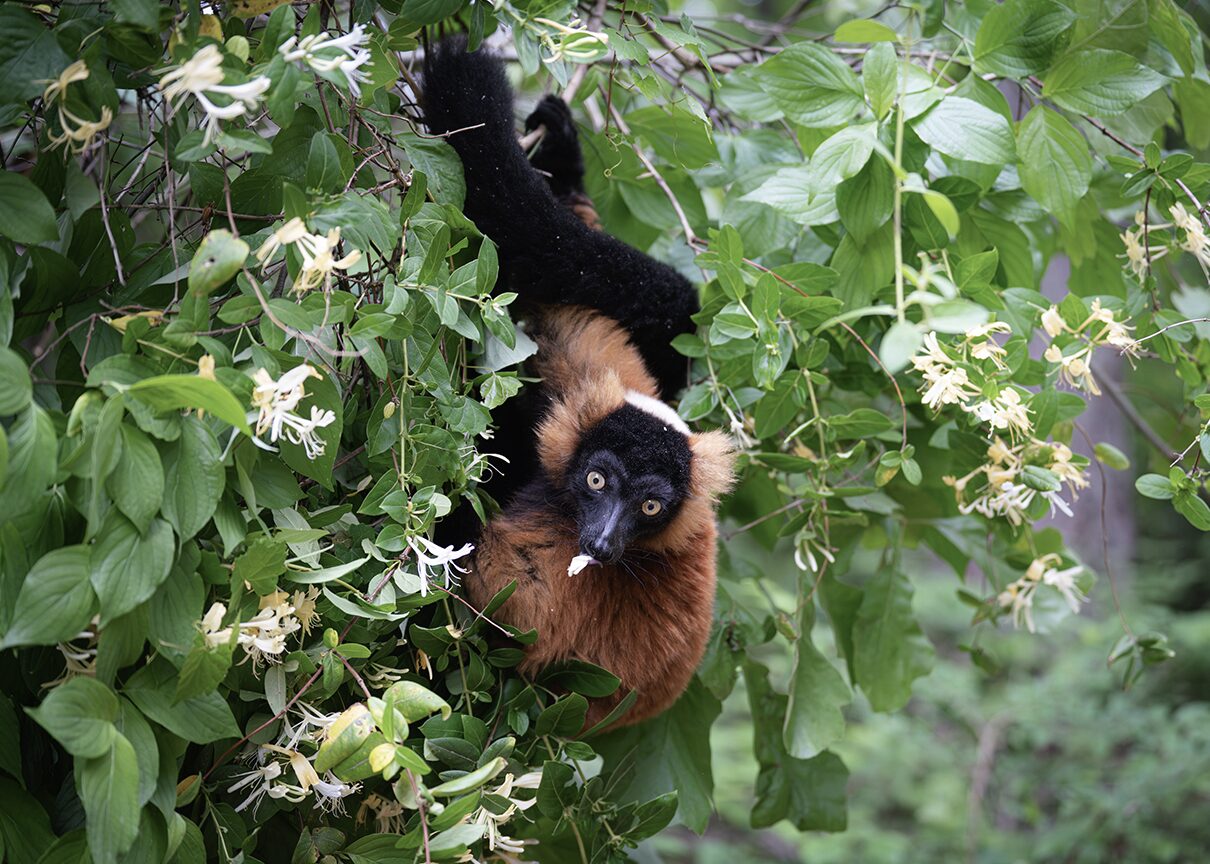
IN THIS ISSUE: Zoboomafoo, new infants, space travel, support and snuggle with our new custom plushes, advancing veterinary science, Presidential Award, and more! Pictured: Kitt, a critically endangered red ruffed lemur, feasts on honeysuckle last week at the DLC.
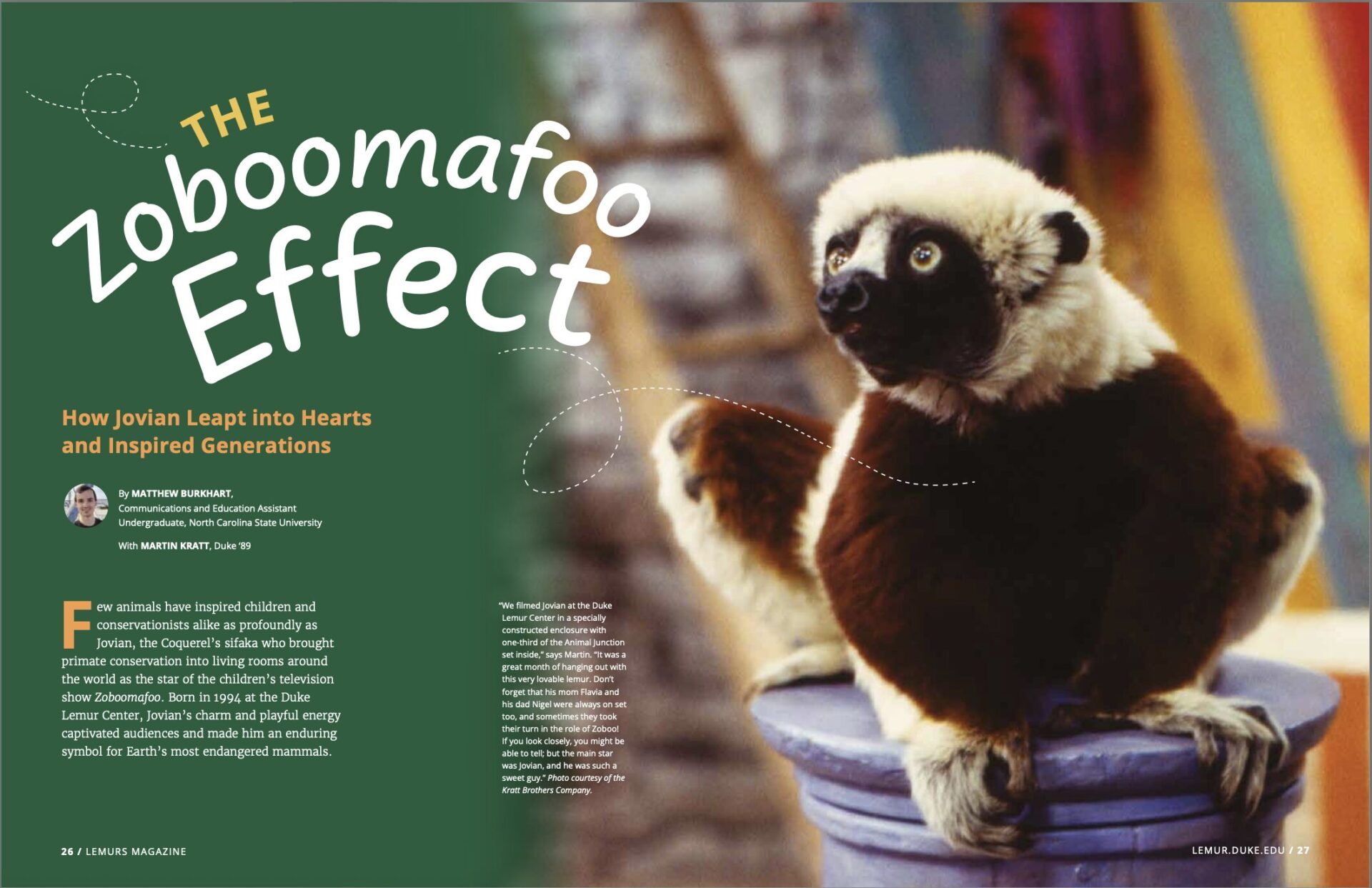
The Zoboomafoo Effect
Few animals have inspired children and conservationists as profoundly as Jovian, the Coquerel’s sifaka famous for starring in the TV show Zoboomafoo. Jovian was born at the Duke Lemur Center on April 10, 1994. The show debuted on PBS Kids in 1999, and 27 years later, Zoboomafoo remains a testament to how storytelling, education, and a single lemur can change the world for the better.
The article The Zoboomafoo Effect: How Jovian Leapt into Hearts and Inspired Generations, written by Matthew Burkhart with Zoboomafoo co-creator Martin Kratt (Duke ’89), celebrates the lasting impact the show had on lemur conservation and generations of fans and includes an exlusive Q+A with Martin. The piece first ran in LEMURS Magazine: Reasons for Hope, released in February 2026 (pages 26-33).
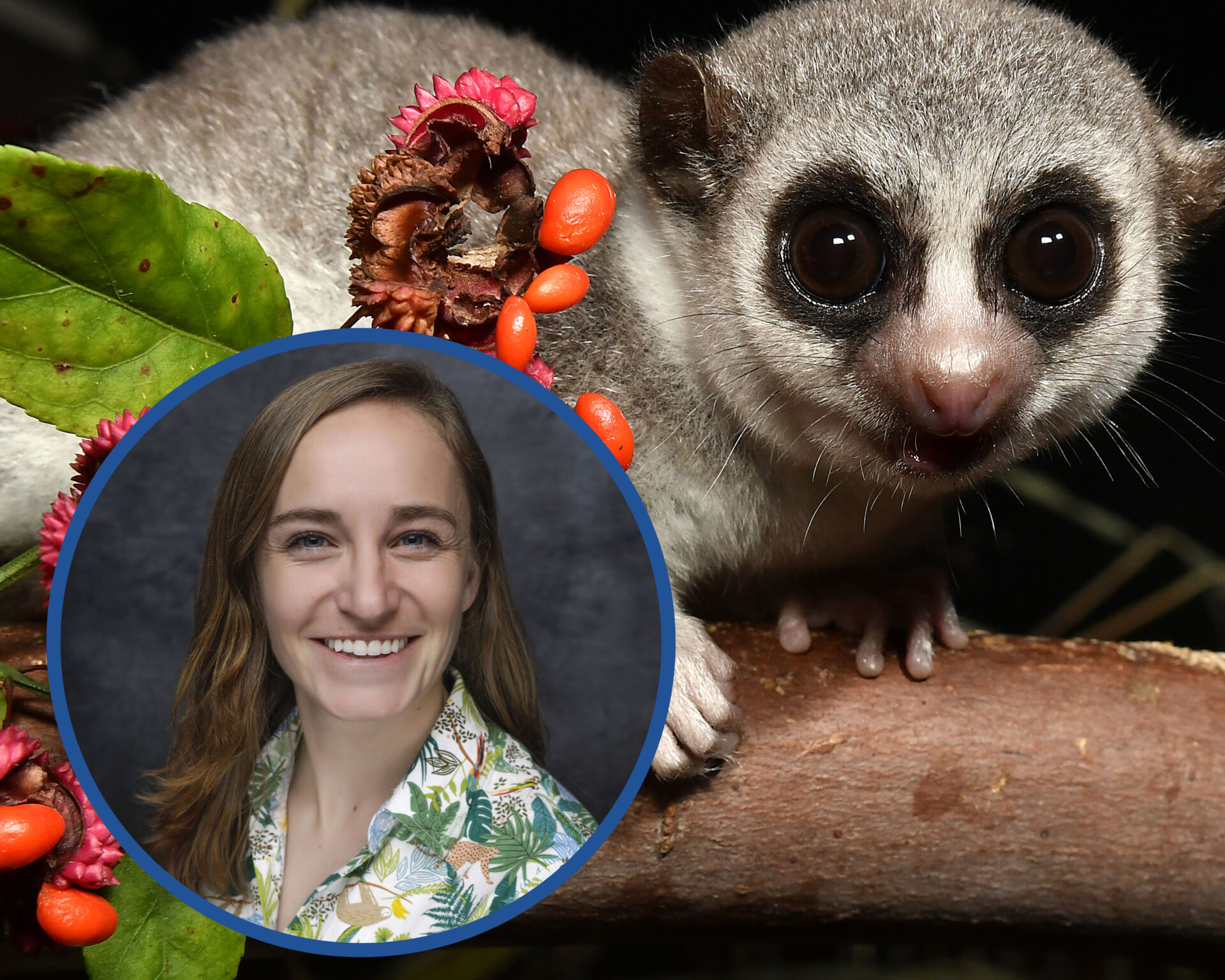
The Field of Hibernation Is Hot, Hot, Hot
… And because dwarf lemurs are the closest relatives of humans capable of hibernation, they’re the hottest topic of all!
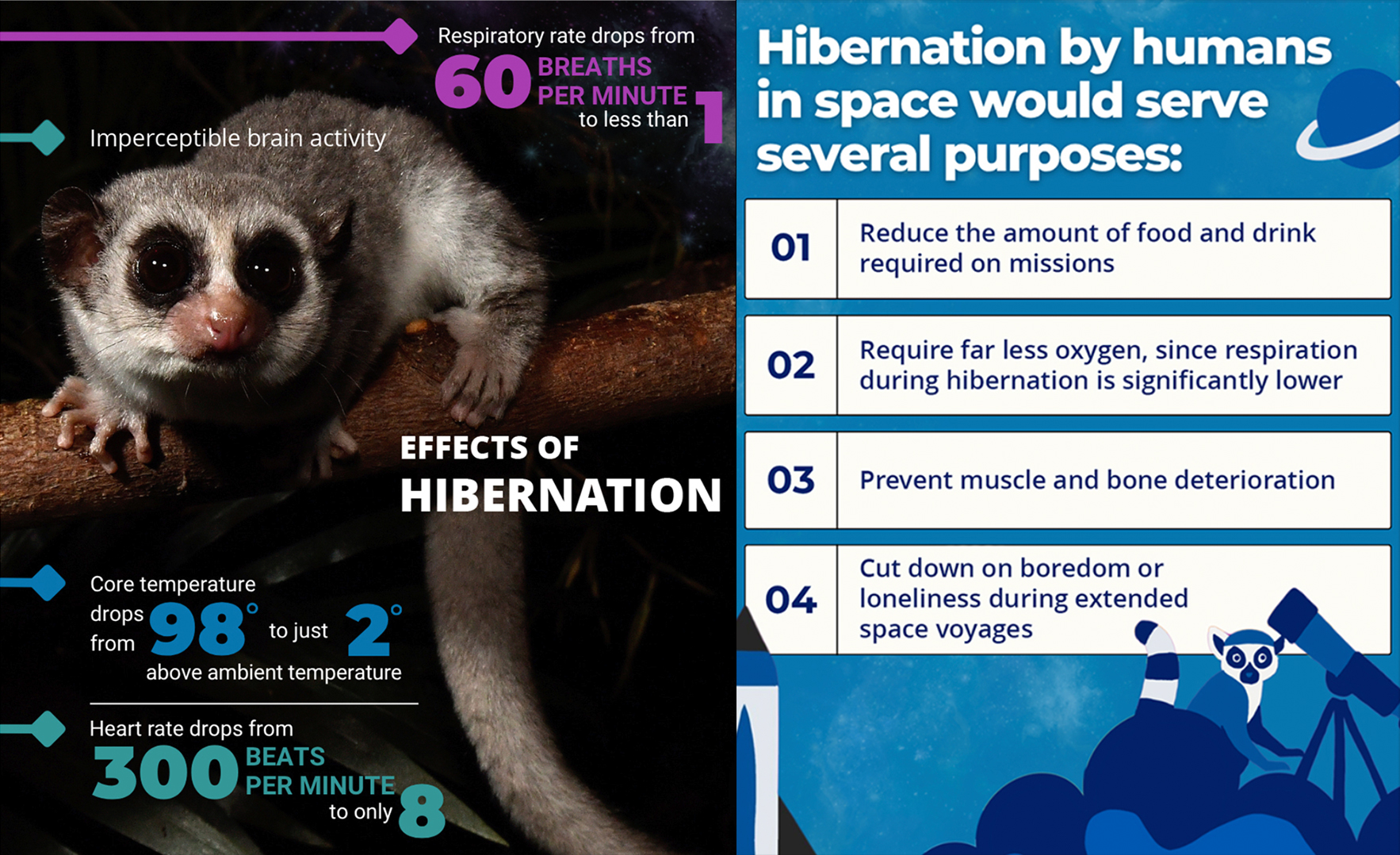
In addition to its applications for deep space travel (see below), insights gleaned from dwarf lemur hibernation have enormous translational potential for humans here on Earth, including therapies for coma management, diabetes, and trauma recovery.
In an article published on pages 44-47 of LEMURS Magazine, DLC researcher Dr. Ana Breit explains that if we were able to safely induce hibernation in humans, we could mitigate muscle atrophy and pressure injuries such as bed sores in immobilized patients and even slow disease progression.
From Lemurs to Lift-off
In From Lemurs to Lift-off: How Lemurs Are Laying the Groundwork for Insterstellar Travel, DLC researcher Dr. Ana Breit discusses her hibernation research with fat-tailed dwarf lemurs and how our tiny relatives might help scientists develop a form of hibernation for long-duration space missions.
Support and Snuggle
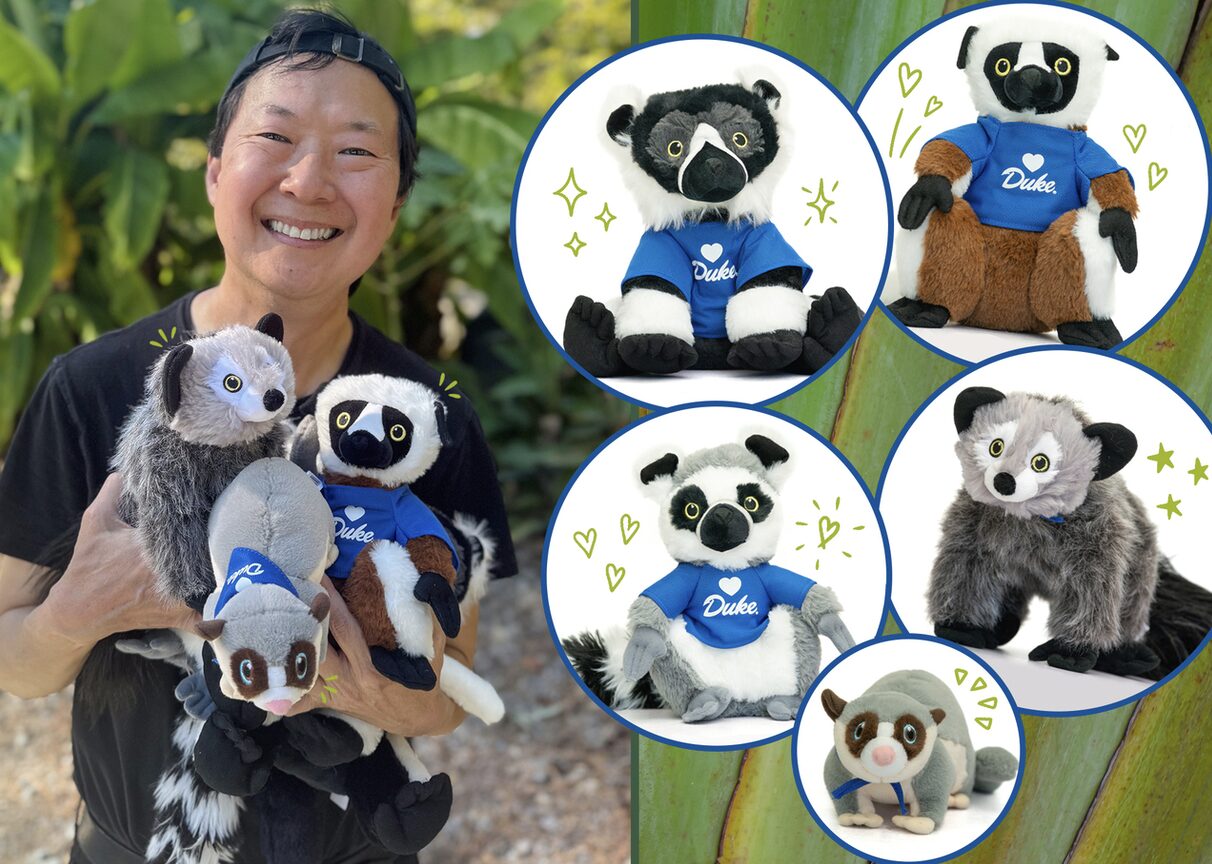
Nothing says “Duke” like a lemur! Looking for a gift for a new grad? Our new plushes, modeled here by international TV and movie star and proud Duke alumnus Ken Jeong (’90), are custom designed for the DLC and for sale in person at our Lemur Landing Gift Shop, in Duke University Store near the Bryan Center on West Campus (limited selection), and online! All proceeds go to lemur care and conservation.
Reasons for Hope: An Earth Day Message
On Earth Day, Executive Director Greg Dye hosted a virtual gathering for supporters and friends, sharing the DLC’s plans for the upcoming year, new developments, and our most promising opportunities. If you couldn’t attend the event via Zoom, we hope you’ll read about it here: Reasons for Hope: Earth Day 2026.
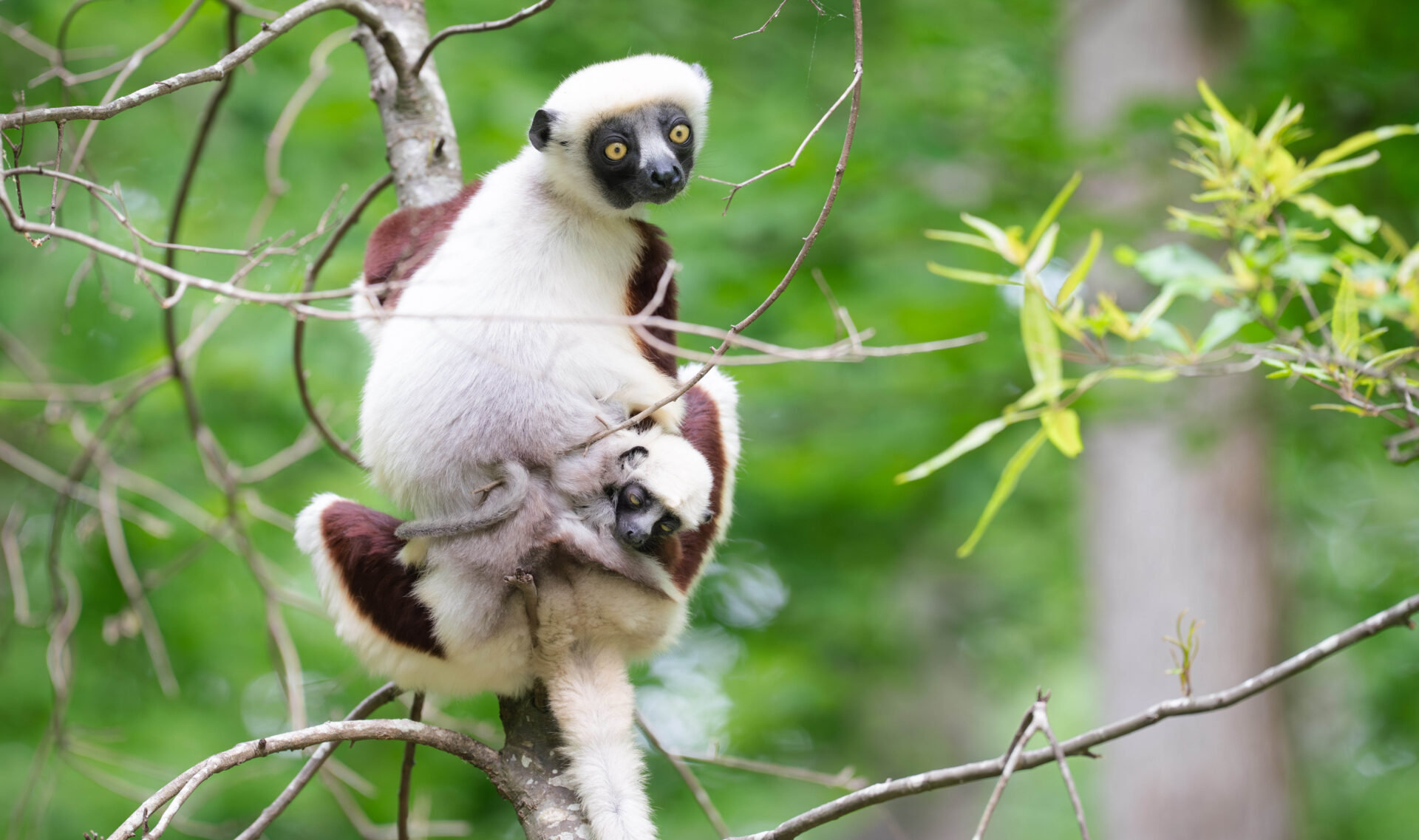
Pictured: Cassia, a critically endangered Coquerel’s sifaka, with her infant—a great-grandson of Jovian, the famous Zoboomafoo.
Presidential Award
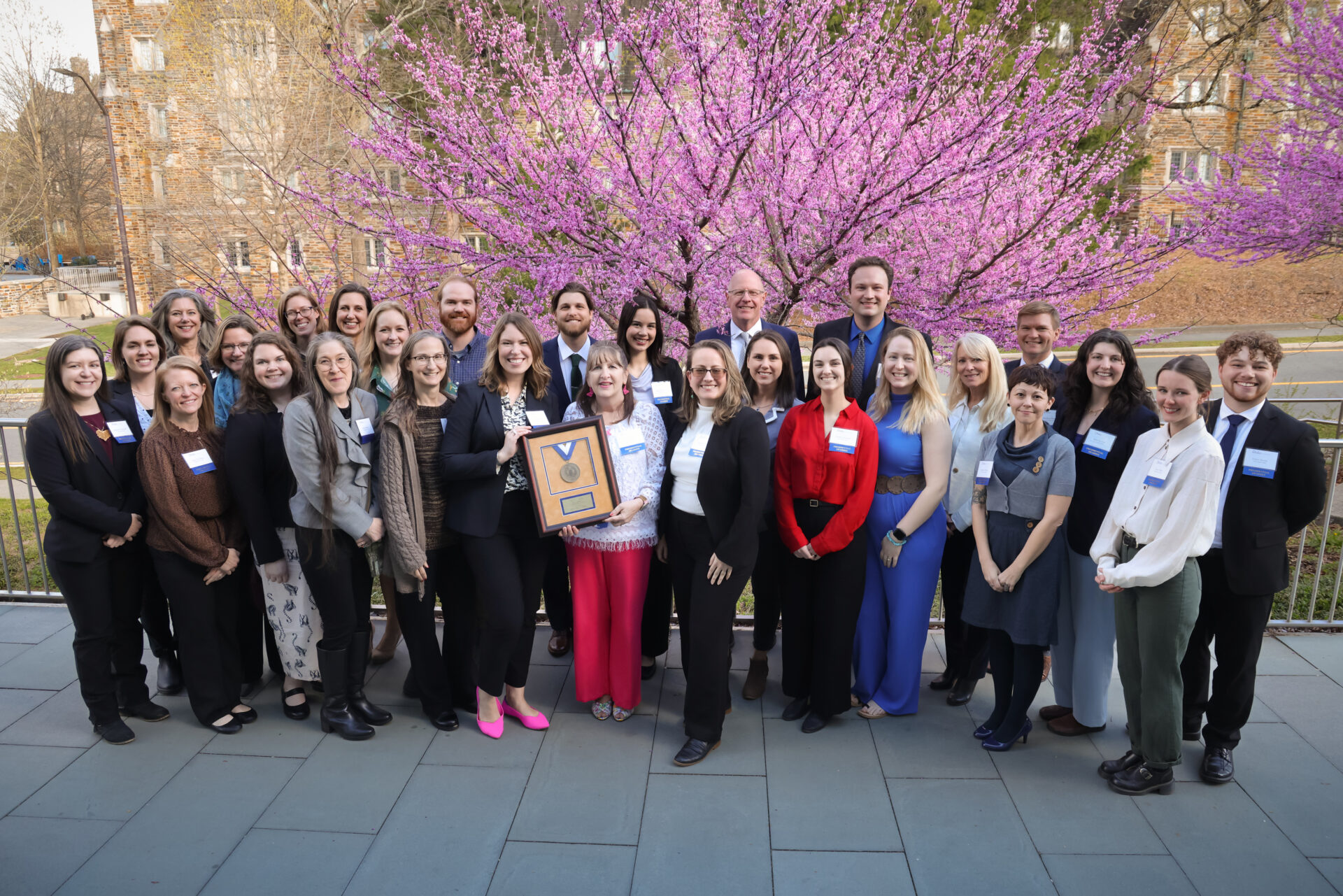
The Lemur Center has received one of Duke’s highest faculty and staff honors: the 2025-26 Presidential Award!
Winners were selected from nominations from across the university and health system, and the DLC was one of only two teams and five individuals to receive this year’s award. We couldn’t be prouder!
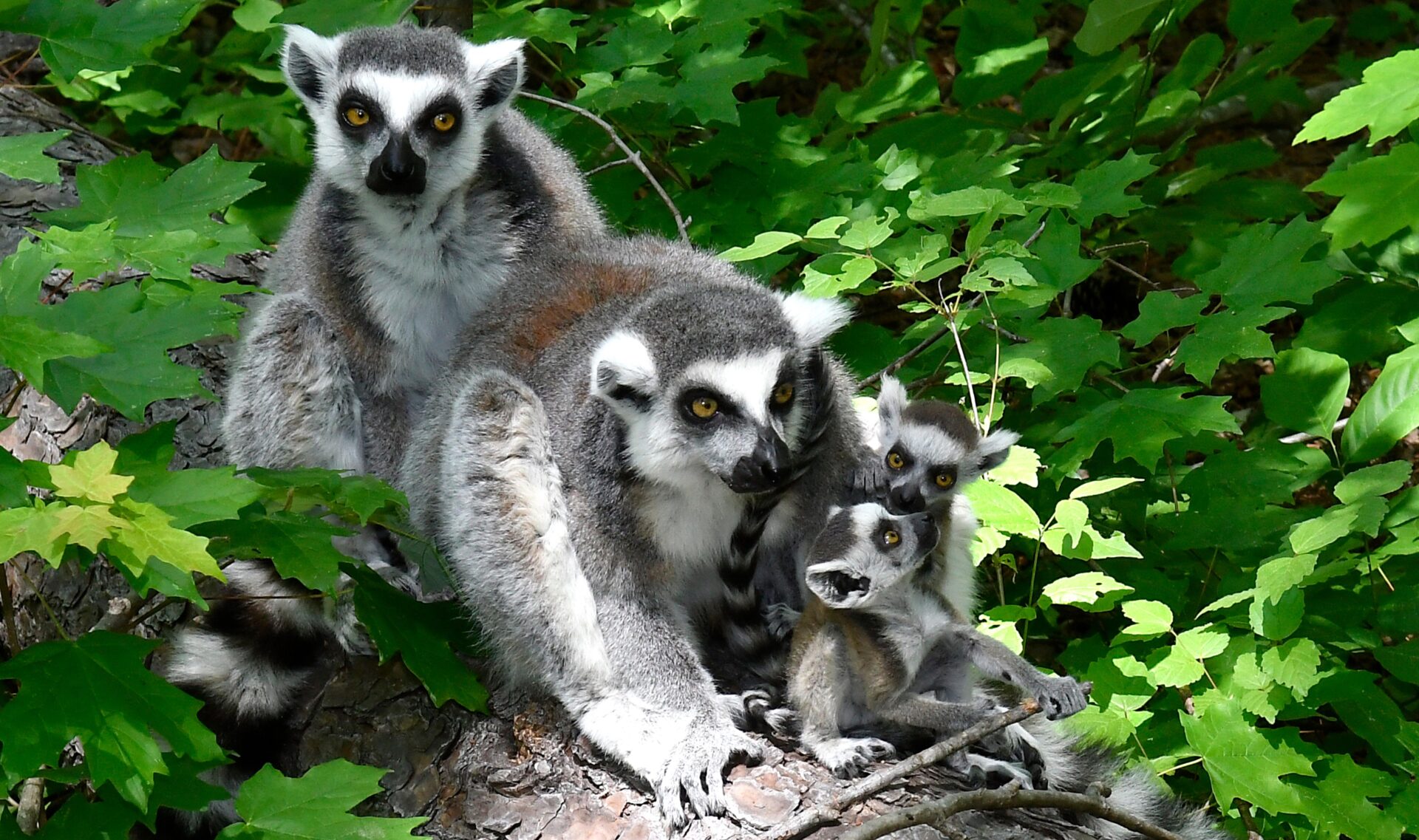
Name Liesl’s Twins!
This ring-tailed lemur brother and sister, born on March 8, are wide-eyed and curious about the world around them! The twins ride on Liesl’s back while the family free-ranges in their 16-acre forest enclosure. Recently, they’ve even started venturing off of mom to climb small twigs and nibble on fresh leaves.
Looking to make a huge impact on the care and conservation of Earth’s most endangered mammals? For a tax-deductible donation of $20,000, you can symbolically adopt and name BOTH of Liesl’s infants! A critically endangered male Coquerel’s sifaka (Cassia’s male infant pictured in the “Reasons for Hope” section above) is also available for naming and symbolic adoption through our Baby’s First Year: Ultimate Adoption opportunity.
Video: Advancing Veterinary Science
Did you know that the Lemur Center is a world leader in lemur veterinary medicine? The Anna Borruel Codina Center for Lemur Medicine and Research features top-of-the-line surgery and intensive care suites, dedicated quarantine and recovery spaces, and advanced radiography and microscopy equipment. Watch the video to learn how the Borruel Center supports the veterinary team in strengthening and expanding their already robust teaching programs and high level of animal care.
“The Borruel Center is really a classroom for us,” says Director of Veterinary Services Julie Ter Beest, M.S., D.V.M. “It allows us to learn as much as we can about each of the species in our care, and then go on to teach those things to the rest of the world.”
Support Our Work
Donate now, or explore all giving options on our SUPPORT US homepage. Your investment protects lemurs and their natural habitat in Madagascar while also supporting groundbreaking non-invasive research, conservation efforts, biodiversity protection, and educational outreach. We couldn’t do this work without you! 💚