Skip to content

Research

Duke Lemur Center
Share
Follow Us

FROM THE ARCHIVES: The DLC’s Founding Aye-aye Fathers (and Mothers)

By David Haring, DLC Registrar and Photographer. Originally published in February 2017. The Duke Lemur Center was one of the first modern-day captive breeding centers to house the mysterious and, at the time, little studied aye-aye. (The Paris Zoo and Jersey Wildlife Preservation Trust were other pioneers.) Three complicated and arduous DLC capture missions to […]

FROM THE ARCHIVES: Could People Hibernate? Lemurs Give Clues

By Mollie Bloudoff-Indelicato. Originally published on September 4, 2013 in National Geographic online. View the original here. Pictured: A fat-tailed dwarf lemur peeks out of a tree in Madagascar. Photograph by Frans Lanting, National Geographic.   Ever wished you could hibernate? Ask a fat-tailed dwarf lemur how it’s done. These mini-primates have a talent that could […]

Happy Halloween! Fossilized bats from the collection of the Division of Fossil Primates

By Matt Borths, Curator of the Duke Lemur Center’s Division of Fossil Primates. Happy Halloween from the DLC’s Division of Fossil Primates! These bats flew over the heads of extinct giant lemurs and elephant birds! Skulls, skeletons, monsters, and the bringing of things back from the dead? Every day is Halloween for a paleontologist!

Ring-tailed lemur scent-marking — and breeding season!

Six-year-old male ring-tailed lemur Jones may look like he is a lemur somewhat lacking in arms as he sniffs a sapling in Natural Habitat Enclosure #9, but rest assured, he is a well-armed male in the prime of life! His odd posture is due to the fact that, in typical male ring-tail marking behavior, he […]

Fossil Friday: Paleopropithecus, Hapalemur, and Plesiopithecus

“One of my favorite lemurs is this extinct giant lemur called Paleopropithecus. It’s a relative of sifakas, but it’s built in a completely different way. These animals are nicknamed sloth lemurs because they have these long limbs and claws that let them move under tree branches in Madagascar. But my favorite feature is their round, […]

Fossil Friday: Aegyptopithicus

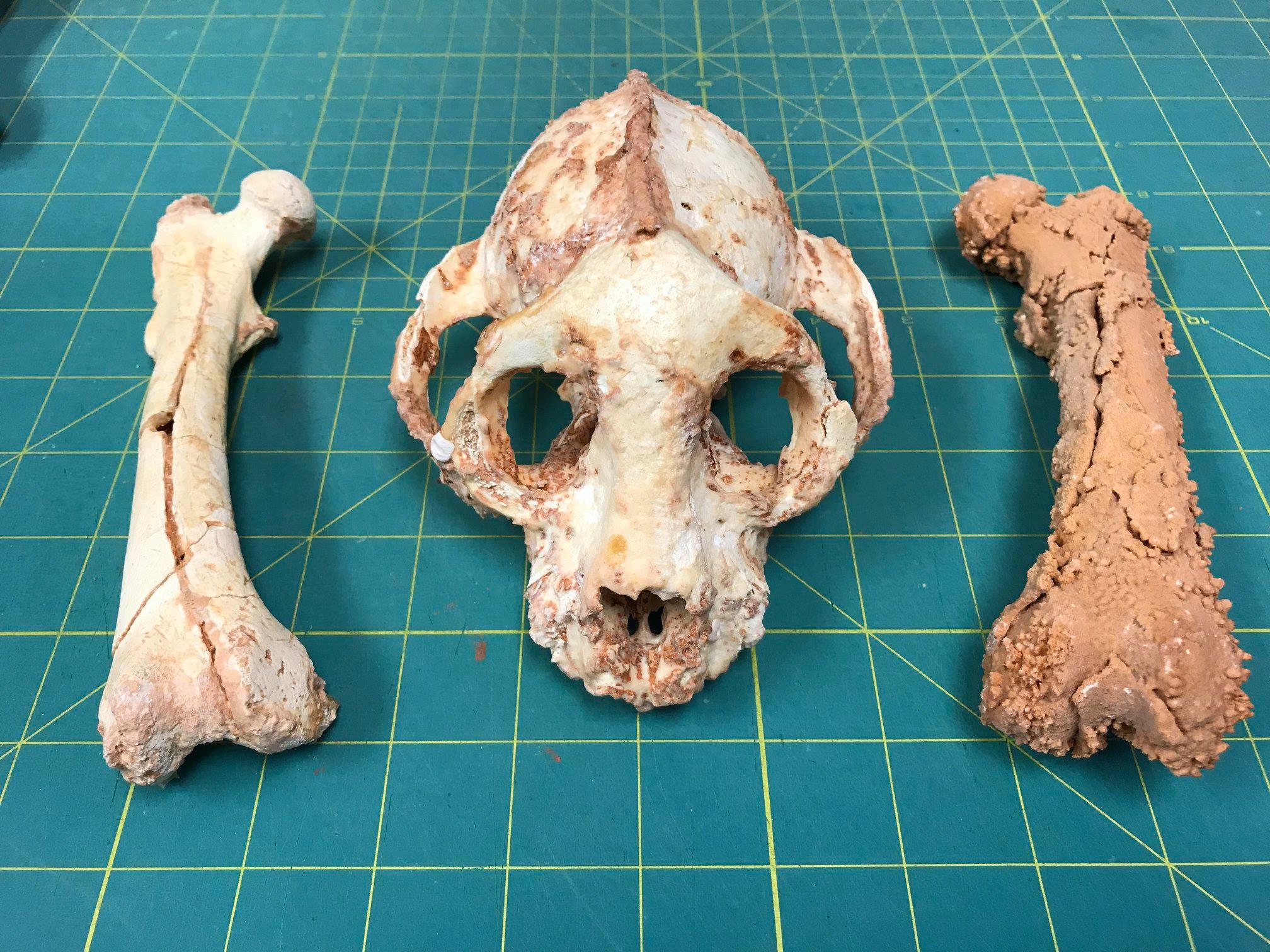
By Matt Borths, Curator of the Duke Lemur Center’s Division of Fossil Primates. This Fossil Friday, meet a primate in your own family tree: Aegyptopithecus, whose name means “The Egyptian Monkey.” This 30-million-year-old face would make a great template for a jack o’ lantern! Aegyptopithecus was named by Elwyn Simons — the father of modern primate paleontology and […]

Plants Can’t Talk. But Some Fruits Say ‘Eat Me’ to Animals.

“Some plants in Madagascar may have evolved fruit colors so that they can be seen by lemurs that are red-green colorblind.” Super interesting article — and a Duke University researcher is featured too! Plants Can’t Talk. But Some Fruits Say ‘Eat Me’ to Animals. By JoAnna Klein. Originally published in the New York Times on October 9, 2018. Read […]

Fossil Friday: Megaladapis

By Matt Borths, Curator of the Duke Lemur Center’s Division of Fossil Primates. Meet Megaladapis, a gorilla-sized lemur that would have moved like an enormous koala! This giant lemur only went extinct between 500 and 300 years ago. Some researchers think there are trees in Madagascar that are still around that relied on Megaladapis to […]