Skip to content

Lemur Care

Duke Lemur Center
Share
Follow Us

A Tale of Two Feces: Field Work in Marojejy

By Lydia Greene, DLC researcher and Duke Ph.D. student Feces is seldom the most palatable topic to discuss around the dinner table, but for lemur researchers, it’s often unavoidable. Take, for example, a recent mission to Marojejy National Park conducted by myself and DLC/SAVA project coordinator, Marina Blanco. We went to Marojejy together to collect […]

How SAS Helped Save a Baby Lemur’s Life

By Colin Warren-Hicks for the Durham Herald-Sun View the original article HERE. DURHAM, N.C. – SAS saved a baby lemur. Well – to clarify – SAS data management programing played a major part in helping to save the life of a rare but ailing newborn aye-aye lemur named Agatha. That’s what Anne-Lindsay Beall, editor of the Customer […]

How A Summer of Lemurs and Analytics Helped Me Find My Voice

By Briana Ullman, Corporate Creative Intern at SAS and student at NC State University RALEIGH, N.C. — Never in my life could I have imagined myself talking about data analysis just inches away from a lemur – and as a part of my job. And honestly, this was only one of the many incredible things that have happened […]

Could poop transplants speed recovery for sick lemurs?

Read the full release: “Lemur Research Gets A Gut Check.” Lydia and Erin’s work is an excellent example of the non-invasive research conducted at the DLC — and how, by working closely with our technician, conservation, and veterinary staff, Duke researchers help improve the welfare of the DLC’s lemur population! Learn more about Duke graduate student Lydia Greene in “Greene Finds […]

Baby lemurs equal big jobs

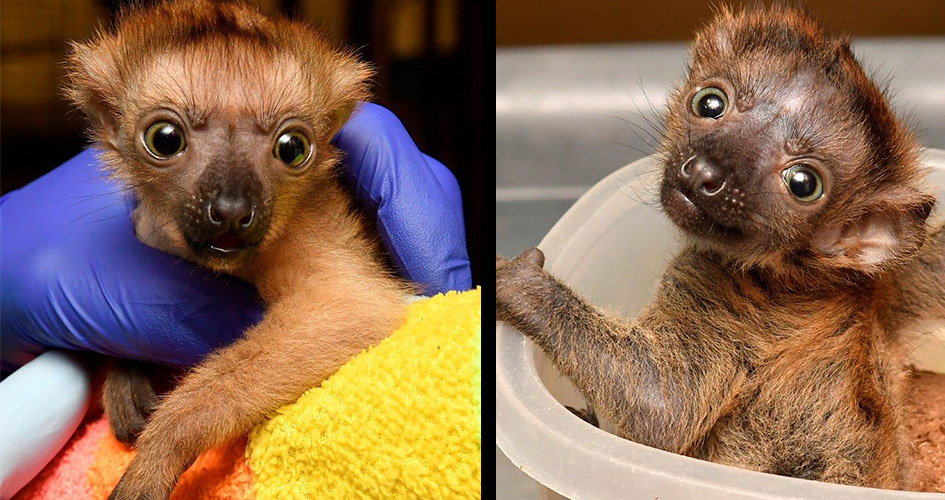
For Duke Lemur Center staff, birthing season is both challenging and rewarding.  By Stephen Schramm Originally published May 23, 2017 in Working@Duke. See the original HERE. At 29 days old, the third baby born to Carolina, a seven-year old mongoose lemur, is easy to miss. Clinging tightly to his mother in one of Duke Lemur […]

Mouse Lemurs’ Role in New Alzheimer’s Hypothesis

Lemurs aren’t just cute, they’re crucial Why are lemurs so special? Here’s just ONE reason: Because non-invasive research on grey mouse lemurs has helped shed light on devastating human diseases like Alzheimer’s: https://today.duke.edu/2017/03/jumping-genes-suspected-alzheimers. Like humans, mouse lemurs develop amyloid brain plaques and other Alzheimer’s-like symptoms as they age. Studying these tiny primates has helped lead to a […]

Avocados Blamed for Sudden Deaths of Four Aye-Ayes

FOR IMMEDIATE RELEASE: Thursday, Dec. 15, 2016 CONTACT: Karl Leif Bates (919) 681-8054 karl.bates@duke.edu DURHAM, NC — A two-month investigation into the sudden deaths of four aye-ayes at the Duke Lemur Center has left just one plausible explanation — avocados. Lemur Center officials believe that a natural toxin found in avocados the animals ate the […]

Fiber & Feces: “Lettus” Research!

The practical use and benefits of research Hi, Duke Lemur Center blog reader! I’m Lydia, a DLC researcher and veteran tour guide. On tours, I’m often asked to explain how research at the DLC can actually help us conserve and care for these endangered animals. What follows here is an example of how, by working closely […]