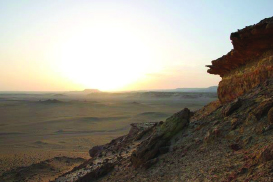
DLCMNH fieldwork has taken place in Egypt for over 30 years, and we hope to continue this work by collaborating with Egyptian paleontologists and geologists. The near-shore marine and continental sediments in the Fayum area span the middle Eocene through early Oligocene. At the time the fossils were deposited, Afro-Arabia was tectonically isolated from Eurasia. The Fayum contains a large diversity of primates, including over 20 species of early anthropoids as well as some of the earliest records of strepsirhines (living lemurs and lorises) in Africa.
Besides primates, the Fayum mammal collections at the DLCMNH include marsupials, bats (at least 11 species), hyaenodonts (20+ species), hyraxes (20+ species), elephant shrews, rodents (10+ species), proboscideans, sirenians and whales, and a number of enigmatic groups found nowhere else in the world. Including non-mammalian species, the DLCMNH Fayum collection consists of nearly 20,000 specimens.
Wadi Moghra is an important 19 million year old locality near El Alamein in northern Egypt. The DLCMNH Wadi Moghra collections are the only sample of this fauna outside of Cairo. When the Wadi Moghra fossils were deposited, Eurasia and Africa tectonically contacted each other. The vertebrates from Wadi Moghra are among the first records for a new wave of immigrants from Eurasia (perissodactyls, artiodactyls, carnivorans) that entered Africa at the beginning of the Miocene. This is also the interval when Old World monkeys (i.e. baboons, colobus monkeys) and apes split from each other. Systematic, functional, biostratigraphic, paleoclimatic and biogeographic studies of these large collections are on-going.
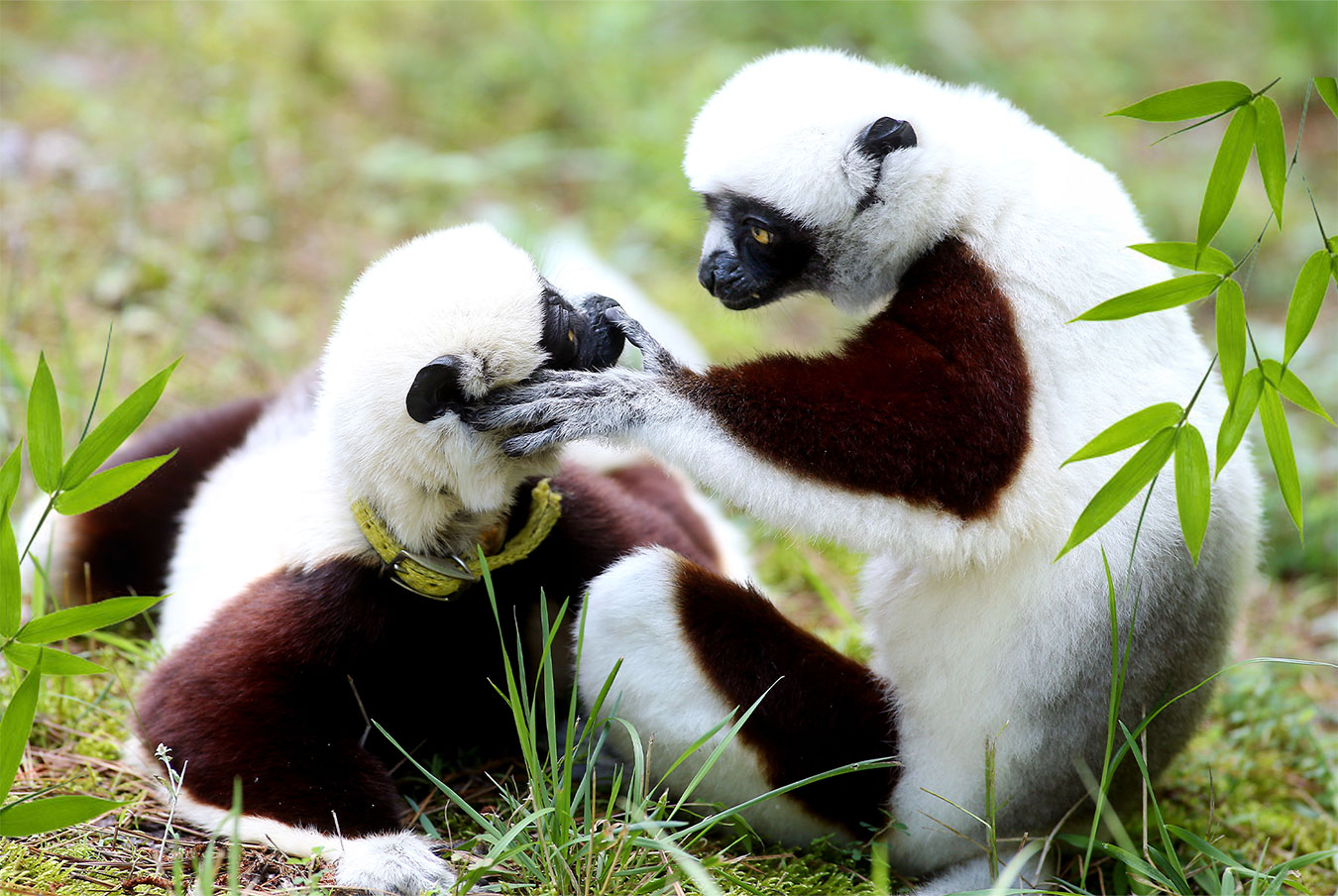
During the early Cenozoic, the ancient ancestor of lemurs dispersed from mainland Africa across the Mozambique Strait to Madagascar. Once in Madagascar, lemurs diversified into dozens of species. Today, lemurs are among the most endangered mammals in the world as human population growth and agriculture push the primates into smaller habitats on the island.
The fossil record of Madagascar reveals that until relatively recently, lemurs were even more diverse than they are today. The DLCMNH subfossil lemur collection is one window into the ancient diversity of lemurs that included the gorilla-sized giant lemur Megaladapis, the sloth-like lemur Paleopropithecus, and the terrestrial, monkey-like lemur Archaeolemur.
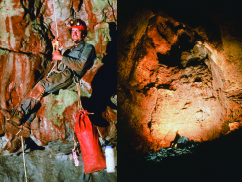
The DLCMNH Madagascar project has been ongoing since the late 1980s. Subfossil (500 to 10,000 year-old) specimens of primates and other vertebrates are collected from caves in limestone karst regions and from swamp deposits at a variety of sites across the island. Work carried out so far has led to recovery of some of the most complete skeletons known for many of the giant extinct lemurs. More than 2,000 specimens from Madagascar are housed at the DLCMNH.
Research is focused on the extinction of subfossil mega- and micro-fauna, documentation of evolving habitats across space and time, functional studies of extinct giant lemurs, and ancient DNA and isotopic analyses of extinct as well as subfossil representative of extant species. With this information, DLCMNH researchers and collaborators hope to understand the dynamic changes that have occurred across Madagascar since the arrival of humans. With this information we work with community conservation researchers through the DLC-SAVA Conservation project and other organizations to use past extinctions to understand the current biodiversity crisis in Madagascar.
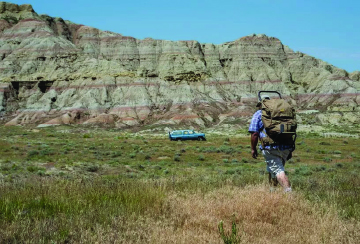
The geologically oldest collection at the DLCMNH from the latest Paleocene and earliest Eocene of North America (~55 through 48 million years ago). During this interval, average global temperatures were very high, creating tropical ecosystems at high latitudes. Fossils collected from sediments in Wyoming reveal the lineage that includes lemurs (strepsirrhines) and the lineage that includes humans (haplorhines) had split and were diversifying as primates assumed the ecological roles they continue to occupy today.
The early Cenozoic collections at the DLCMNH are used by researchers to probe the early anatomical adaptations that allowed primates to become such a widespread lineage. Wyoming specimens also help to document the arrival of other groups of mammals (perissodactyls, artiodactyls, rodents, carnivores) in North America. The collection is used to document how different animal lineages changed through the Paleocene-Eocene Thermal Maximum (PETM), an interval of rapid climate change that serves as a model for interpreting how modern ecosystems respond to changing global climates.
DLCMNH fieldwork in Wyoming has been ongoing since the 1980s and continues to be carried out each summer in conjunction with the Evolutionary Anthropology and Biology Departments at Duke.
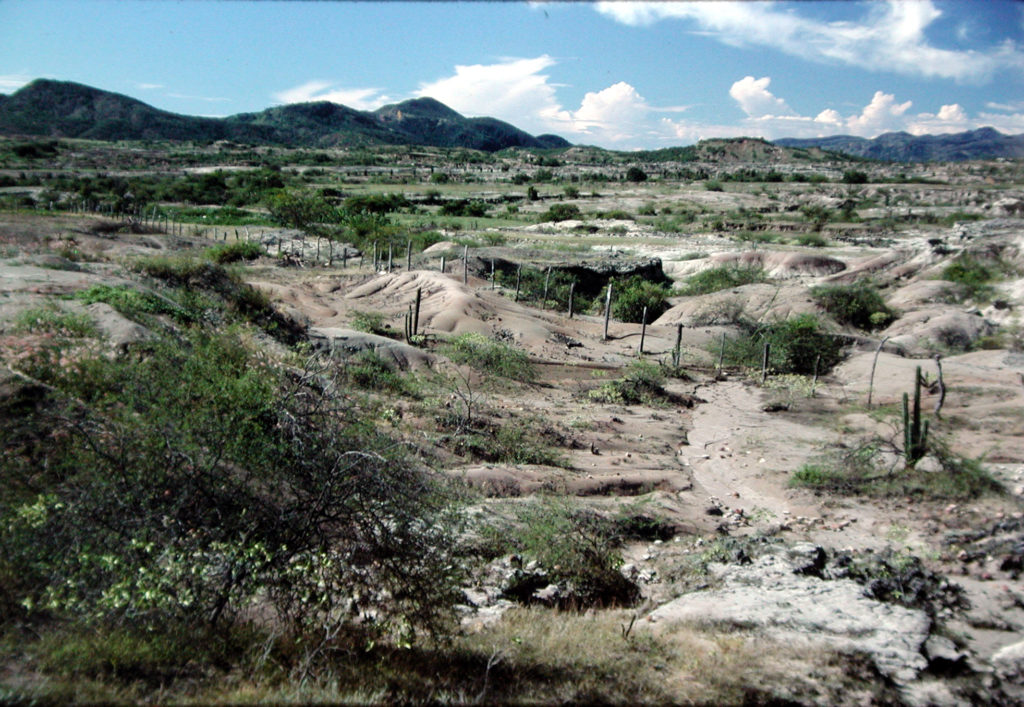
During the Oligocene, one lineage of anthropoids dispersed from Africa to South America where they diversified into the platyrrhines (New World monkeys). Then, South America was an island continent and it was populated by unique mammal lineages like notoungulates and American metatherians. The record of this faunal diversification is preserved in the La Venta collection from the Miocene of Colombia. Through years of fieldwork, Dr. Richard Kay, Professor of Evolutionary Anthropology at Duke University, discovered and studied the fossils that were recently accessioned in the DLCMNH collections.
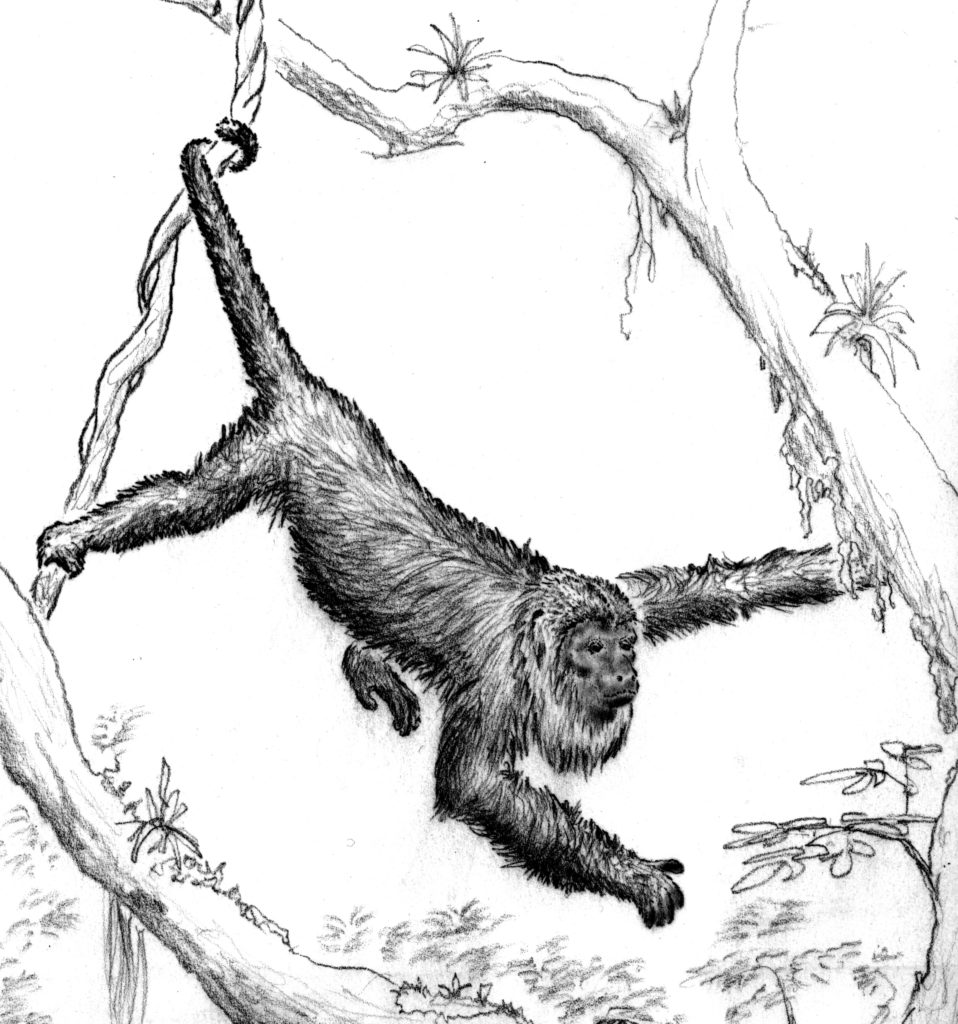
The DLCMNH maintains an extensive collection of osteological specimens and a large cast collection that documents the morphological and taxonomic diversity of primates through the Cenozoic and into modern landscapes. One of the most remarkable aspects of the osteological collection is that many of the specimens were once part of the living collection at the DLC. Detailed records of the life history of each animal are maintained by the DLC including the animal’s weight, diet, and social status. Further, many of these animals were part of non-invasive locomotion and cognitive studies at the DLC. This collection directly connects each of these biological variables to the bones of individuals. Scans and measurements from these specimens can be utilized by researchers to interpret the behavior and ecology of extinct primates.