The time is now
Lemurs are the most endangered mammals on Earth

about
Duke Lemur Center
Founded in 1966 on the campus of Duke University in Durham, NC, the Duke Lemur Center is a world leader in the study, care, and protection of lemurs—Earth’s most threatened group of mammals.
With more than 200 animals across 13 species, the DLC houses the world’s most diverse population of lemurs outside their native Madagascar.
Our Mission
To advance science, scholarship, and biological conservation through non-invasive research, community-based conservation, and public outreach and education.
Facebook Feed
Mongoose lemur Maddie celebrated her 20th birthday in style! 🧡
Keeper Lauren, the primary caretaker for Maddie and her family, put together a groovy party yesterday to celebrate this iconic lady! Maddie, mate Duggan, and son Clancy enjoyed a totally tubular lava lamp feeder, eagerly reaching for chunks of yummy banana. Maddie also snacked on a beautiful cake (made of folivore chow, banana, and coconut cream) and explored her sweet ride (a cardboard VW Bus). Maddie is the matriarch of a long family line of critically endangered mongoose lemurs, so we're happy that she got to celebrate a big milestone birthday in such epic fashion 😎
📸: Keepers Lauren and Leah ... See MoreSee Less
4 CommentsComment on Facebook
We're proud to share the new issue of our annual SAVA Conservation newsletter celebrating the progress and hopes for our community-led conservation programs in the northeastern SAVA region of Madagascar 🌍
➡️ lemur.duke.edu/2025-conservation-news
Read all about our agroecology projects, environmental education, forest restoration, economic empowerment, and more! Our newest issue is brighter, fresher, and eminently scrollable. Check out the redesign and join us in celebrating everything we’ve achieved together in northeastern Madagascar in 2025! 🤗 ... See MoreSee Less
2 CommentsComment on Facebook
Start or end your perfect day in Durham with one of the Duke Lemur Center's General Tours! ☀️
➡️ lemur.duke.edu/visit
Get acquainted with Earth's most endangered mammals on a General Tour! This family-friendly tour offers an overview of the DLC, its three-fold mission, and its residents—and allows guests to see at least eight species of the amazing lemurs that call the DLC home! This open house-style tour is ideal as an introduction to the DLC for all ages and includes loads of interaction and Q&A opportunities with trained educators stationed along the tour path 🤗
During the summer, General Tours run every Thursday and Friday from 5-7pm and Saturday and Sunday from 10am-noon! Make sure to book your tickets in advance, as tours often sell out and we are not able to accept walk-ins. General Tour tickets are $17/person, with discounts available for children, seniors, students, military, and Duke employees 💙
🎥: Abby Flyer ... See MoreSee Less
8 CommentsComment on Facebook
This is a Big Sister Hedwig appreciation post ☺️
Ring-tailed lemur Liesl's twins, who are almost three months old, now spend a lot more time off of mom and require a little extra supervision. Thankfully, ten-year-old sister Hedwig is up to the task! The female twin is a little more outgoing than her brother, so Hedwig usually keeps an eye on her as she bounces from twig to twig while Liesl cares for the clingier male. Hedwig, a twin herself, grew up with older sisters who helped raise her, so she had great role models! 💖
➡️ lemur.duke.edu/adopt/ultimate/liesl-infant
Interested in making a large donation to help protect Earth's most endangered mammals? For a tax-deductible donation of $20,000, you can symbolically adopt and name BOTH of Liesl's infants! These little lemurs will only be available for donor naming for another two weeks; once they turn three months old, if no one has adopted them, the husbandry staff that care for the family will choose names for them 🥰
📸: Sara Nicholson ... See MoreSee Less
8 CommentsComment on Facebook
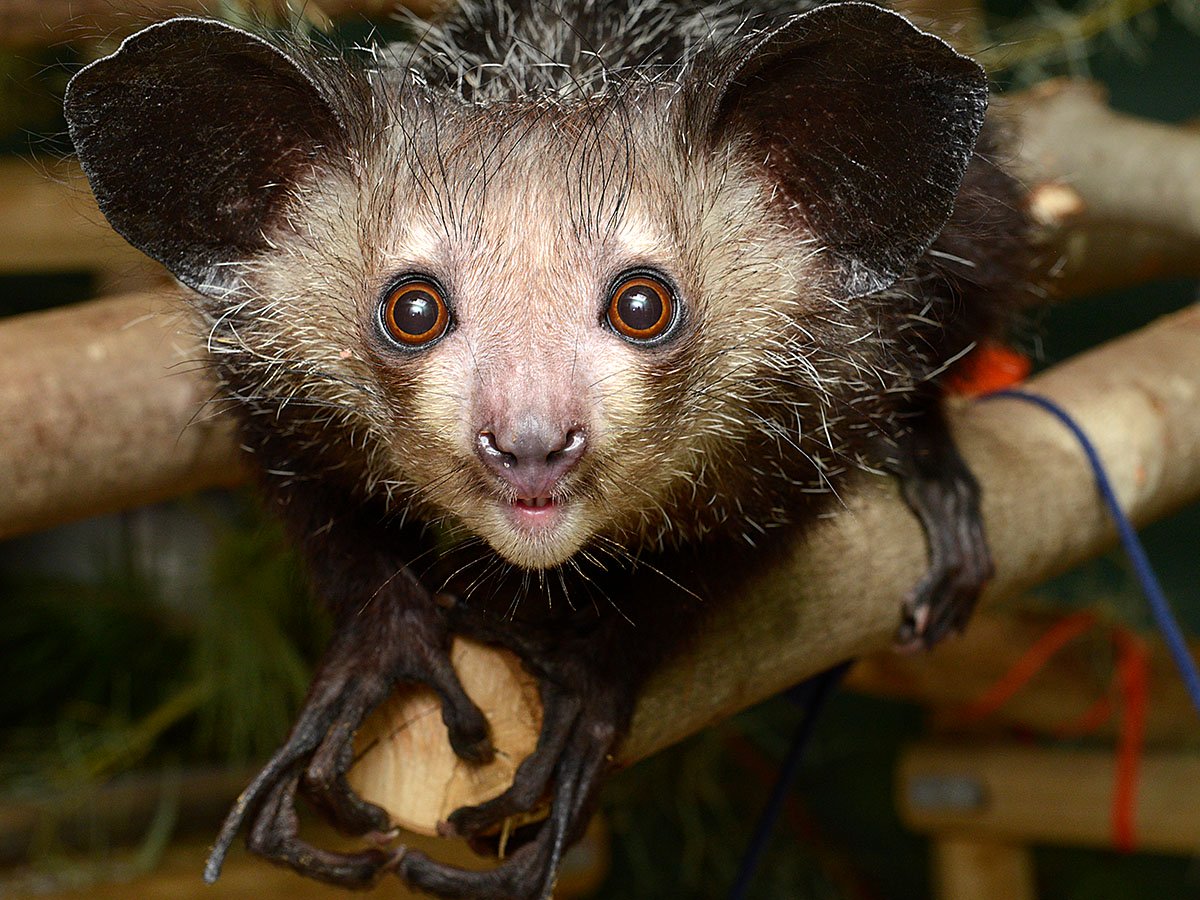
Exciting news... for the first time in many years, our summer tour path includes aye-ayes! 😱
Our oldest lemur, 39-year-old aye-aye Poe, now resides in one of our nocturnal viewing rooms on our tour path! Poe shares two rooms in the front of our nocturnal building with his daughter, 30-year-old Ardrey, as well as one of our resident bush babies. Despite their spooky appearance, aye-ayes can be some of the shyest lemurs, so Poe and his crew have access to a second room out of sight where they can retreat if they need a little alone time 🫣
Fun fact: Poe, who was born in the wild in Madagascar and traveled to the DLC in 1987, is the oldest lemur in recorded history and was one of the original founders of the aye-aye population in human care 🌿
➡️ lemur.duke.edu/visit
Want a chance to catch a glimpse of the elusive aye-ayes? Book your tickets now to visit on a General Tour or Private Tour! Tickets are available through the end of July, and August tickets will go on sale on the first Tuesday of June! Be sure to book your visit in advance, as we are not able to accommodate walk-ins without a tour reservation 🎟
📸: David Haring ... See MoreSee Less
19 CommentsComment on Facebook
We're so excited to announce the birth of another critically endangered blue-eyed black lemur infant... Meet Zava! 💙
➡️ lemur.duke.edu/zava
Zava was born on March 2, 2026, and is the second daughter of parents Charlie and Mangamaso. Last year, her older sister Mitsiky was the only blue-eyed black lemur infant in human care, in any facility in the world. Zava, whose name means "nature" or "clearness" in Malagasy, was symbolically adopted and named by a generous couple who wish to remain anonymous 😊
“Zava is very observant of her environment,” says Kevin, the primary keeper for the tight-knit family of four. “She loves to be outside. She looks at little insects with curiosity, sometimes even gently touching them.” 🐞
Blue-eyed black lemurs are among the most endangered primate species in the world, with possibly fewer than 1,000 individuals remaining in the wild, so maintaining a genetically diverse population of these lemurs in human care is a crucial safety net 🌍
📸: Madison A. (1,2,4,5); Britt Keith (3) ... See MoreSee Less
13 CommentsComment on Facebook
Want to take photos like these? Take a stroll through the woods on our Walking with Lemurs tour! 🤩
➡️ lemur.duke.edu/wwl
These incredible lemur portraits were taken by a guest in our iconic Natural Habitat Enclosures (NHEs). On a Walking with Lemurs tour, a small group of guests journey out with an experienced guide into two NHEs, where you can view the lemurs in the trees of large, forested habitats from just six feet away, with no barriers between you (or your camera lens) and the lemurs! 📸
Tickets for Walking with Lemurs tours are available through the end of July, and August tickets will go on sale on the first Tuesday of June! You don't want to miss this unique experience, which has been described by guests as both "an unforgettable family outing" and "top tier as an adult." Visit our website to learn more and schedule your visit! ✨ ... See MoreSee Less
12 CommentsComment on Facebook
Hello from mongoose lemurs Murray and Fernanda 🤗
Did you know that lemurs are part of a group of primates called strepsirrhines? Like dogs, lemurs have wet noses, which help trap scent particles and contribute to their incredible sense of smell. This is in contrast to haplorrhines, or dry-nosed primates, like monkeys and apes (and us!). Lemurs utilize complex olfactory cues to flirt, mark their territory, and communicate in general. Many of the things that we talk about, lemurs smell about! 👃
🎥: Abby Flyer ... See MoreSee Less
10 CommentsComment on Facebook
Sometimes lemurs fall out of trees... and sometimes trees break with lemurs on them 🌿
Lemurs don't fall out of trees often, and when they do, they generally bounce right back up. During one of our Walking with Lemurs tours, Coquerel's sifaka Albus climbed on a branch that wasn't as stable as he thought, and one of our volunteer photographers managed to capture his hilarious expressions as he realized his mistake a little too late! Albus is completely fine, as this young daredevil is very used to rough-and-tumble play with his siblings and has missed his fair share of overconfident leaps in the past 😂
📸: Sara Nicholson ... See MoreSee Less
15 CommentsComment on Facebook
One question we get all the time on tours: how do you get the lemurs back into the building at the end of the day? The answer: ringing a dinner bell! 🛎️
Before free-ranging lemur troops are allowed to roam in our multi-acre forest enclosures, they have to complete months of positive reinforcement training, learning to associate the sound of a specific bell with receiving high-value snacks in their indoor enclosures. Lemurs are incredibly food-motivated, so no matter where they are in the forest, they will run, leap, or hop their way back to the building, allowing our staff to safely lock them in overnight ☺️
🎥: Abby Flyer ... See MoreSee Less
109 CommentsComment on Facebook